guides
How to Layer Light So a Room Works at Night
Most living rooms run on one overhead fixture and wonder why they never feel finished after dark. Here is the layering logic, ambient, task and accent, that actually fixes it.
By Toine · 24 August 2026 · 6 min read
Affiliate links: This page contains affiliate links. If you buy through one, the retailer pays me a commission. It costs you nothing extra. That commission does not decide which products I choose or what I write about them. I have not tested the products myself unless I clearly say so. Prices and availability can change; the retailer's price at the time you order applies. [How I work](https://vestados.com/affiliate-disclosure)
Turning off the ceiling light for a week taught me more than any product page. Two smaller lamps suddenly made the room feel finished after dark, even though the total light barely changed. This is the layering logic I use: ambient first, then task, then accent, with warm bulbs and a dimmer when you can.
The three layers in one glance
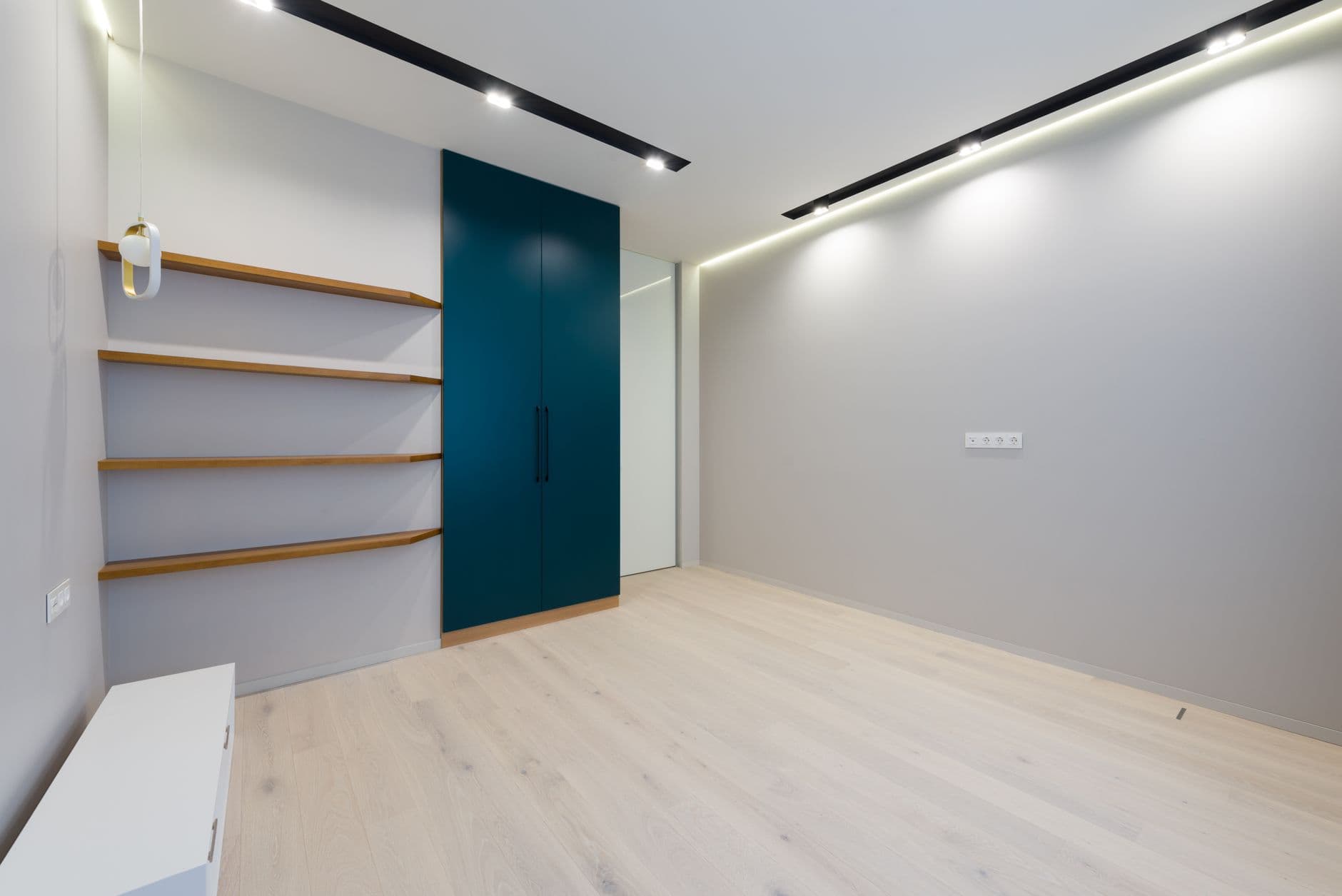
One overhead fixture cannot do ambient, task and accent at the same time.
• Ambient: soft fill so you can walk in without thinking. • Task: light at the chair, desk or console where your hands work. • Accent: a small beam on art, plaster or a plant. • Keep bulbs near 2700K in sitting rooms; about 3000K can suit kitchens and baths. • Add a dimmer on at least one circuit.
Numbers at a glance (honest guide ranges, not lab tests):
• Ambient living room: roughly 1000 to 2000 total lumens from soft sources, split across several fixtures rather than one blast. • Task reading: roughly 400 to 800 lumens at the chair. • Floor reading lamp: shade about 100 to 120 cm from the floor, near seated shoulder height. • Table lamp: shade bottom near seated eye height, often about 100 to 110 cm from the floor. • Kelvin: about 2700K for sitting rooms; about 3000K for kitchens and baths; avoid 4000K in living spaces.
More on floor lamps alone: [how to choose a floor lamp](https://vestados.com/blog/how-to-choose-a-floor-lamp). Pendant height over a dining table (about 75 to 90 cm above the tabletop): [statement lighting over the dining table](https://vestados.com/blog/statement-lighting-over-the-dining-table).
Ambient: fill without the glare of one ceiling light
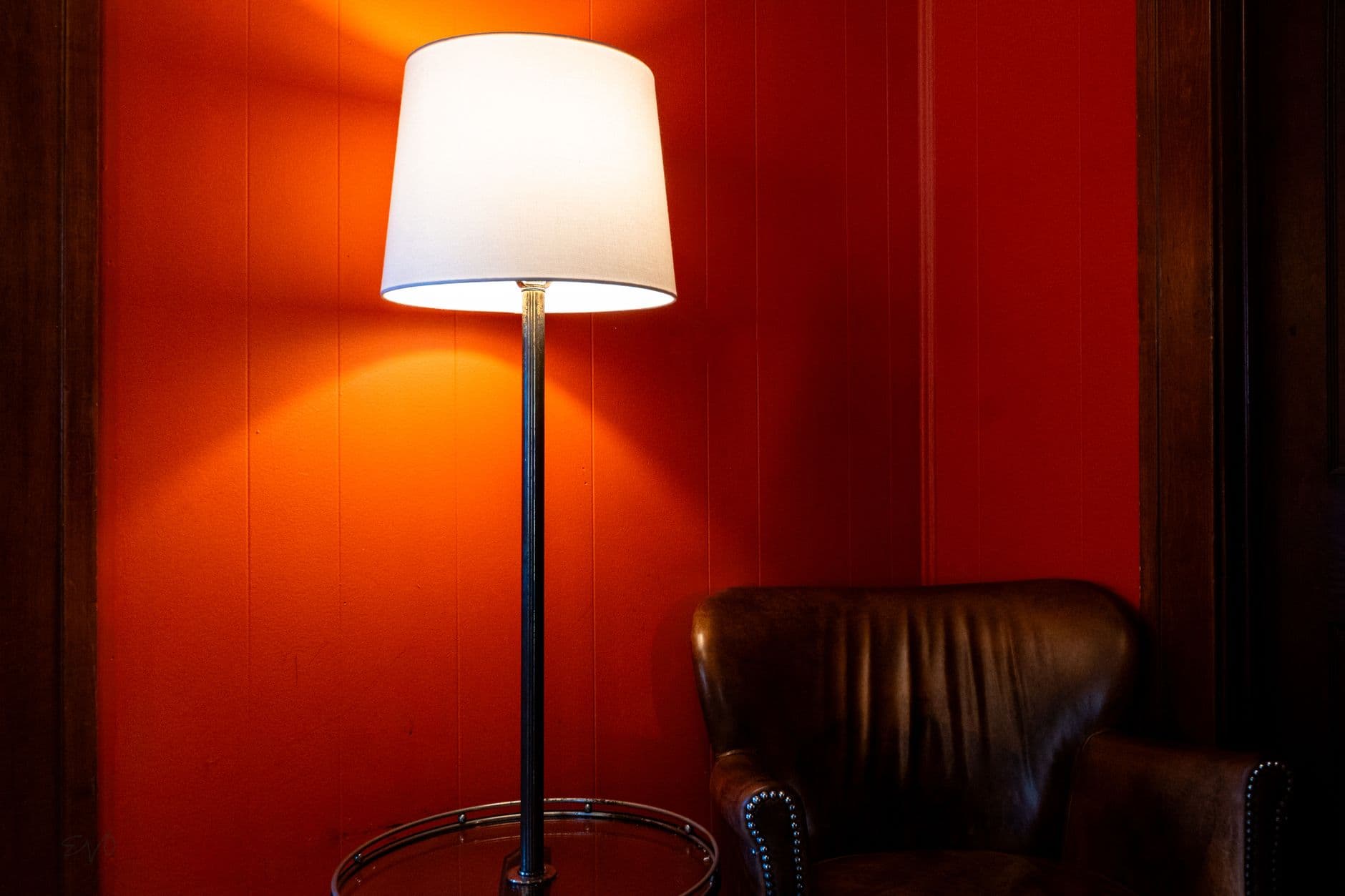
Ambient light should be soft and a little indirect, not a single bright disc overhead.
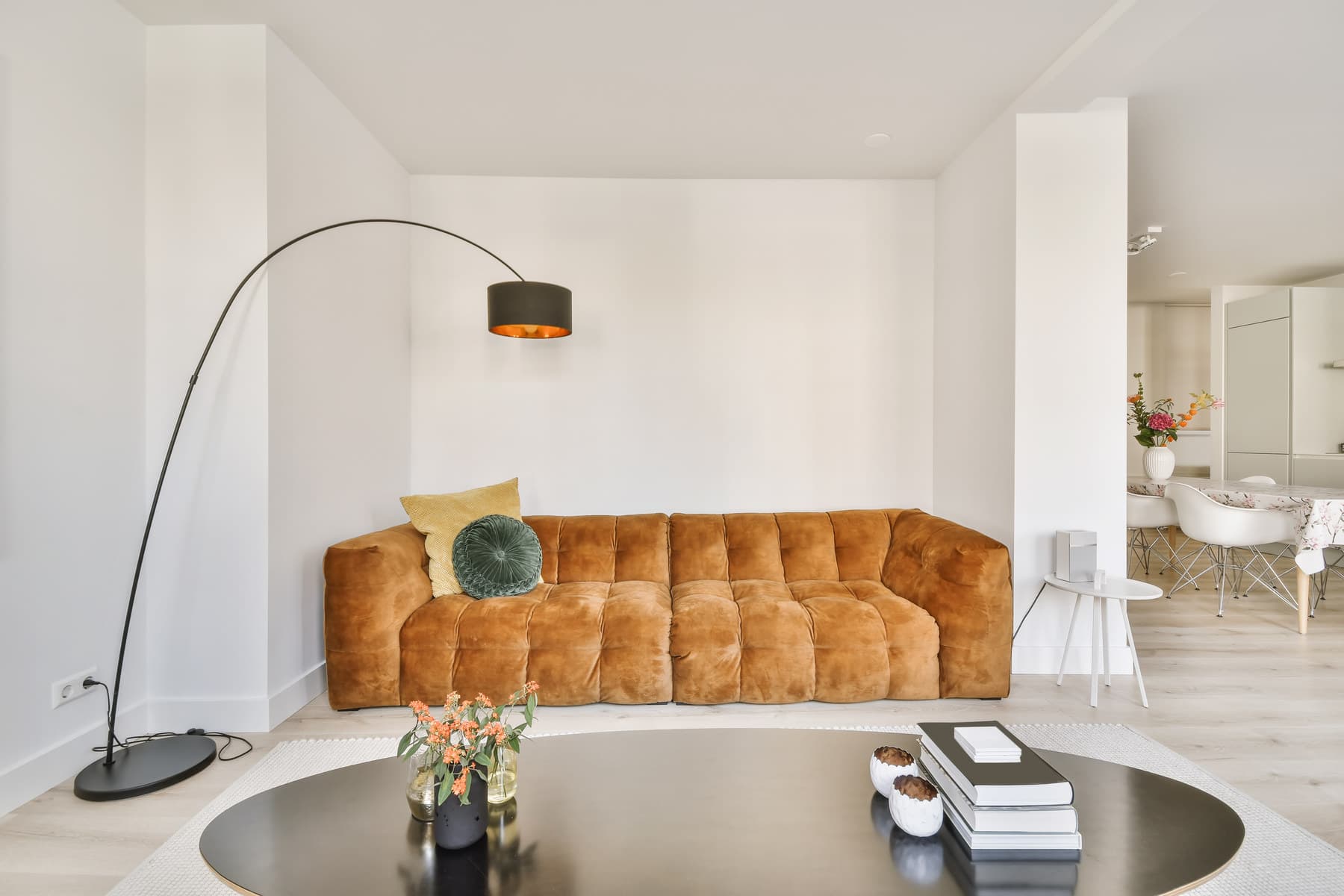
An uplighter in a corner, a floor lamp with a wide shade, or wall fixtures that throw light up and across a surface beat a bare ceiling rose. Try living without the main light for a few evenings. Most rooms feel warmer with two or three smaller sources even when the lumen count stays similar.
For a typical living room I treat roughly 1000 to 2000 total lumens from ambient sources as a useful ballpark. Prefer several softer lamps that add up to that range over one harsh blast from the ceiling. Room size, wall colour and how much daylight you still get after dusk all move the target, so treat the numbers as a guide, not gospel.
Named starting points (exact only when you buy that model; otherwise caption similar to): 1 Floor glow: Louis Poulsen Panthella · exact · [[product:panthella-floor]] · plain shop link (Connox / Lampen24) until tracked 2 Paper column: Audo Hashira · exact · [[product:hashira-floor-lamp]] · plain shop link (Nordic Nest) until tracked
Task: put light where you actually sit

A reading lamp at shoulder height does more for evening use than three ambient fixtures with nowhere to sit.
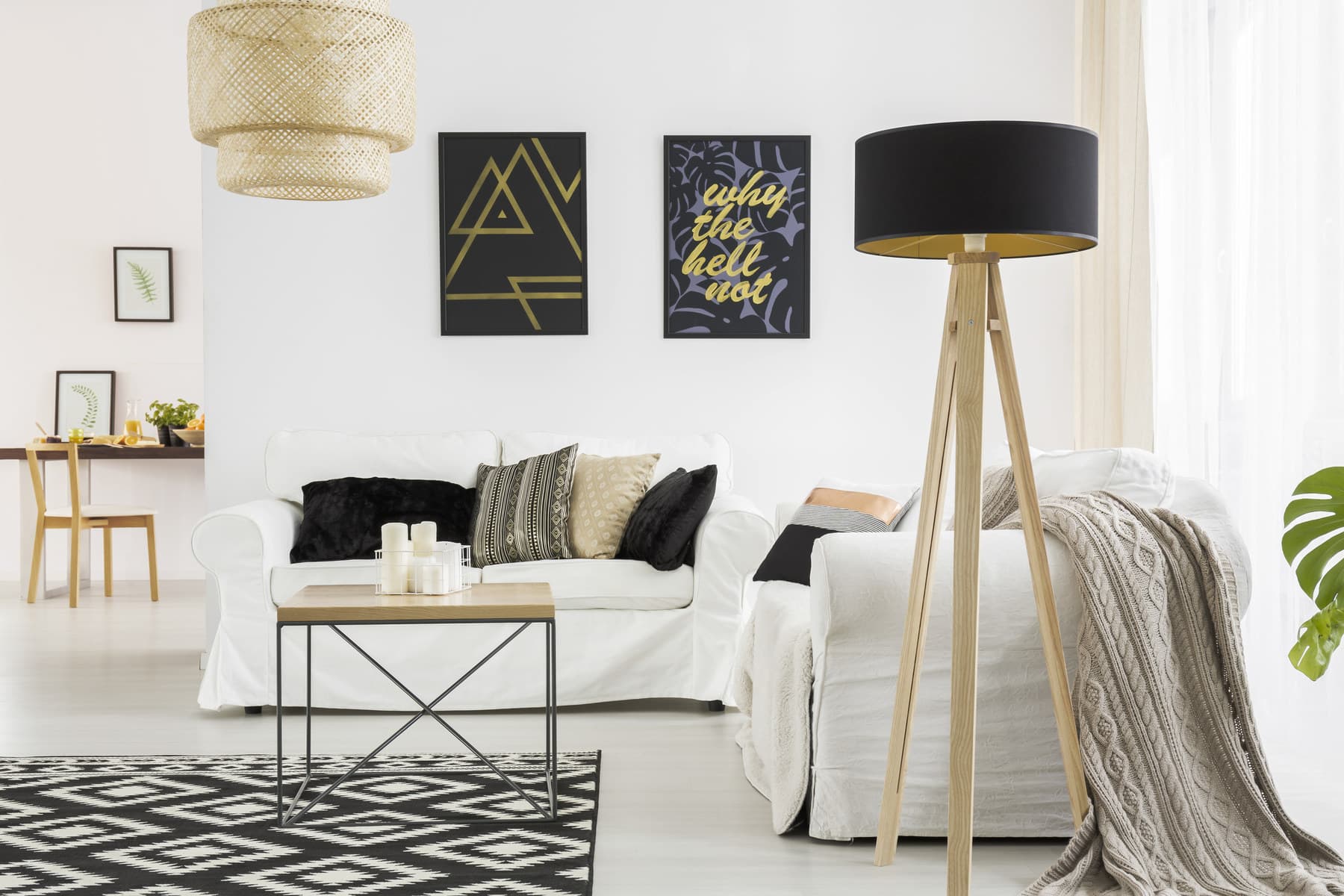
Task light belongs next to the activity, not centred for symmetry. If a chair sits empty after dark, a missing task lamp is often why. Aim the shade so the bulb stays hidden from your eyes when you are seated.
Reading at the chair works well with roughly 400 to 800 lumens aimed at the page. For a floor reading lamp, set the shade about 100 to 120 cm from the floor so the bottom sits near seated shoulder height. That keeps light on the book without the bulb in your eyes.
Named starting points: 1 Spring balanced: Anglepoise Type 75 floor · exact · [[product:anglepoise-type-75]] · plain shop link 2 Directed shade: Louis Poulsen AJ floor · exact · [[product:aj-floor-lamp]] · plain shop link
Table lamps for the middle height
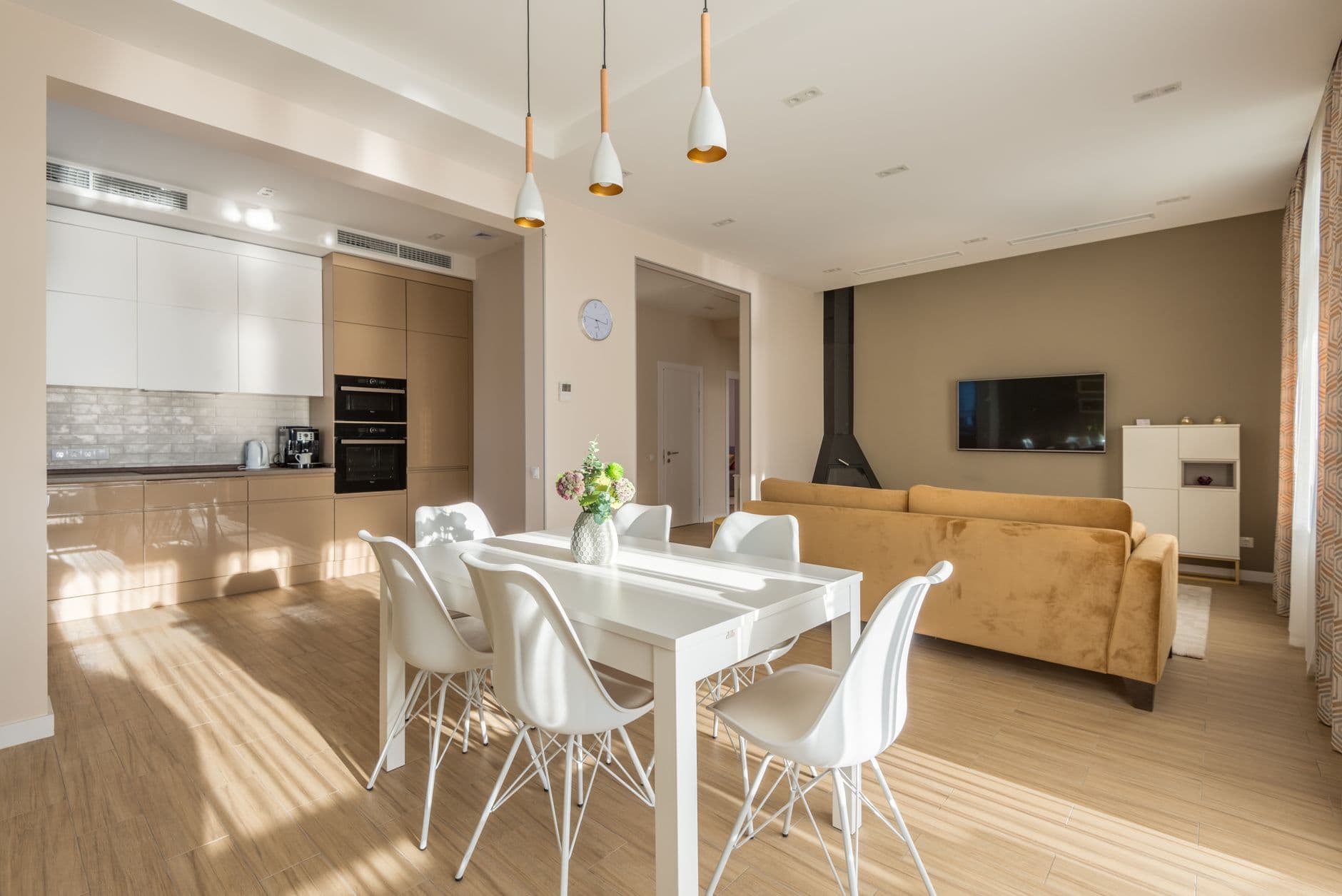
Table lamps fill the height between floor lamps and the ceiling, which is where most rooms go flat.
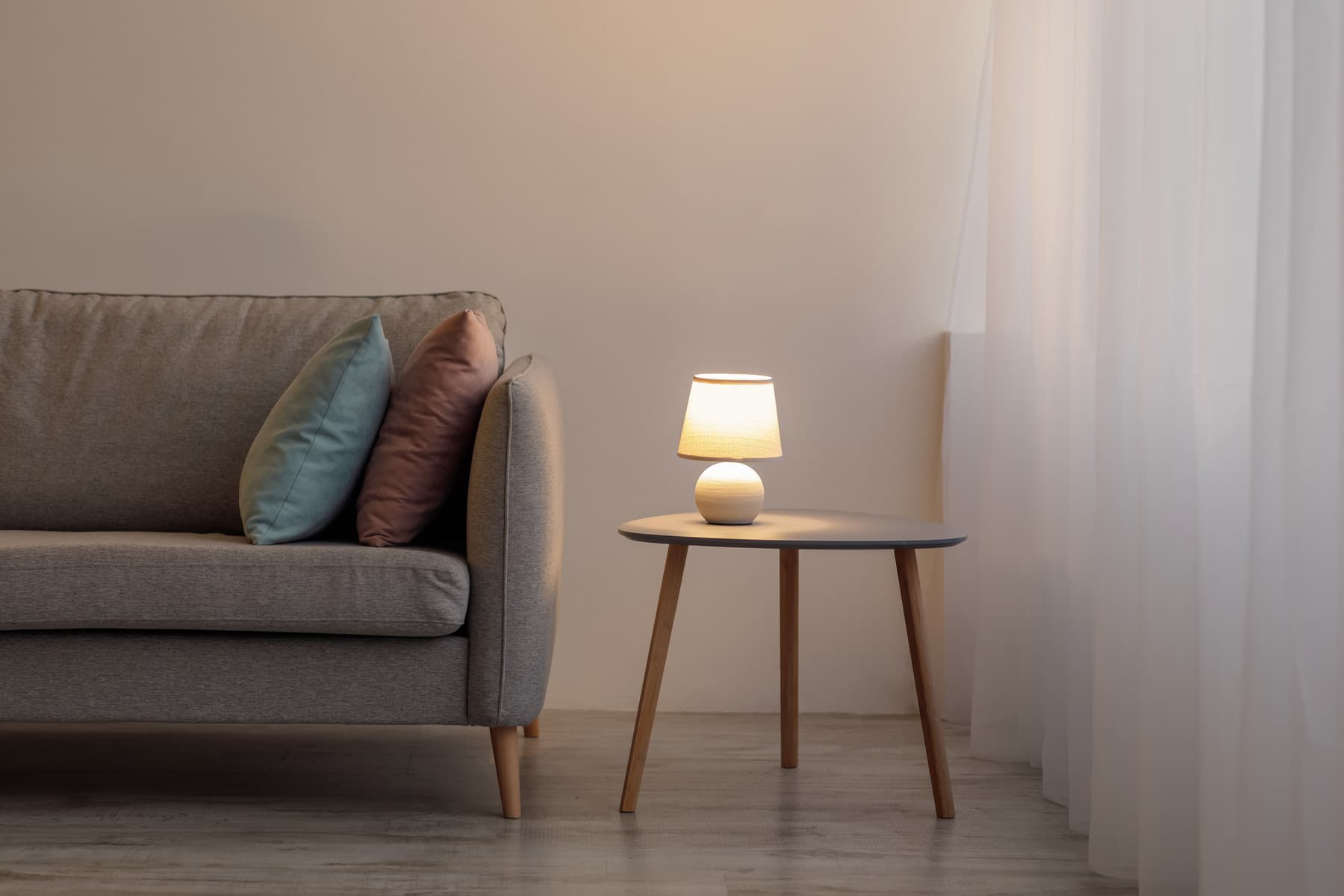
Park one on a sideboard, a console by the door, or a low shelf. Keep the shade opaque enough that you see glow, not the bulb. When you sit nearby, the bottom of the shade should land near eye height, often about 100 to 110 cm from the floor depending on the seat. Pair with warm wall art from Seven Paper Prints when you want a tracked print above the console.
Wall lamps that wash a surface
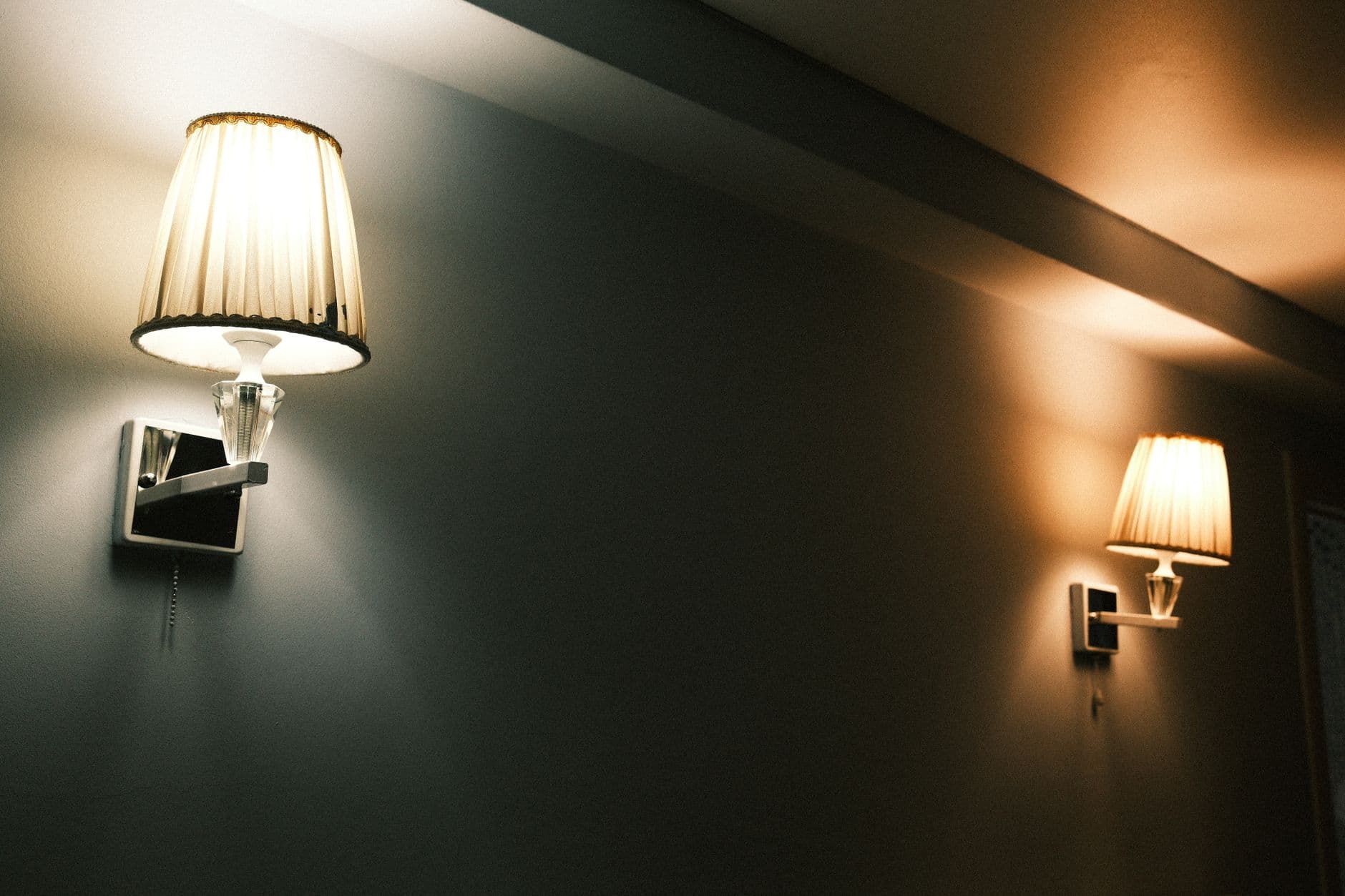
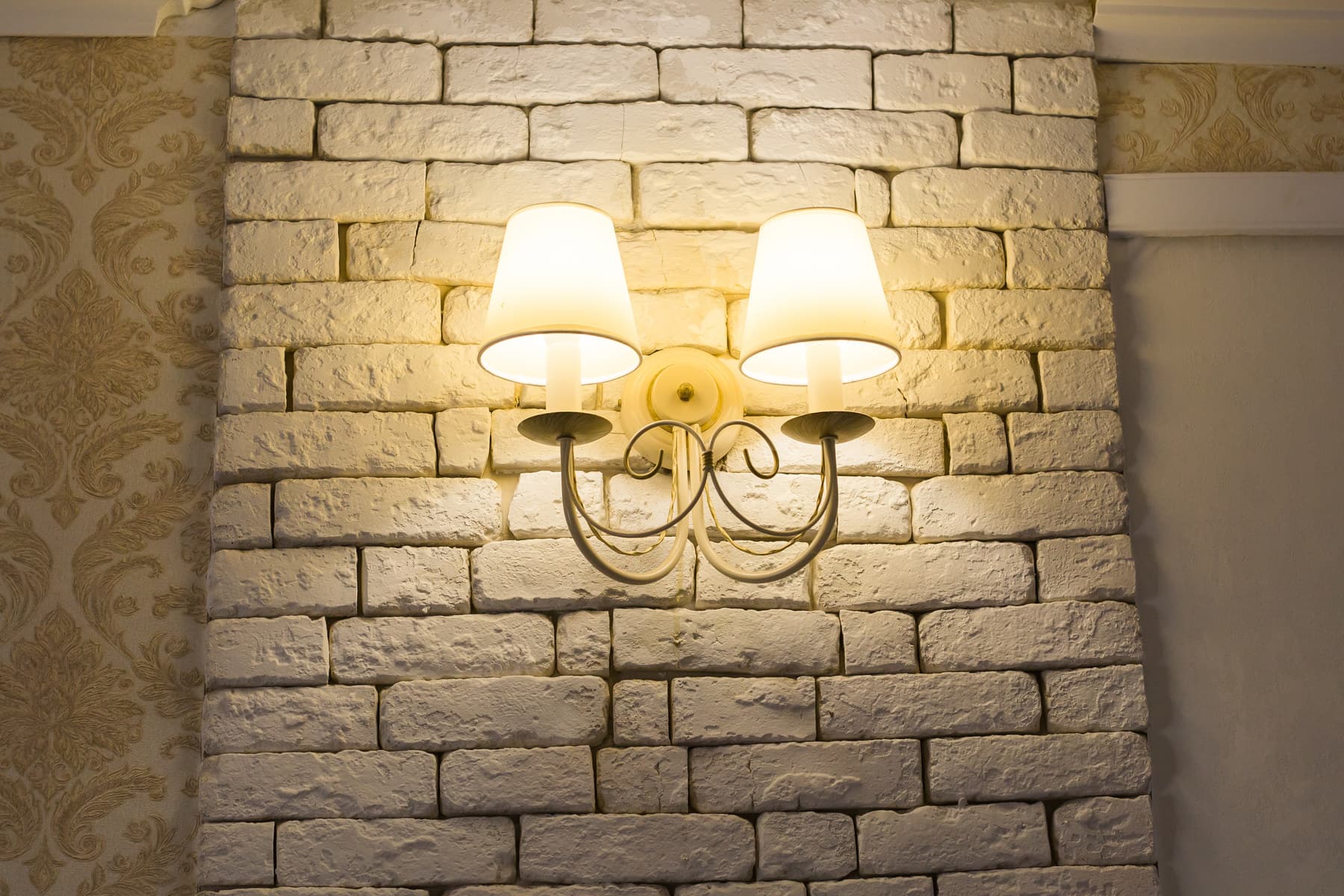
A wall lamp turns a blank plane into ambient fill without eating floor space.
Use one beside a sofa end, in a hallway into the living room, or as a soft wash behind a dining nook. Swing arm versions earn their keep next to a reading chair when a floor lamp will not fit. Keep finishes quiet: brushed brass, black, or plaster white.
Accent: the small beam that makes the room feel finished
Accent light rarely needs to be bright; it only needs a clear target.
Art, plaster texture, a shelf vignette, or a plant silhouette. Add this layer after ambient and task already work. One well aimed accent often photographs more expensive than a brighter, flatter room.
Warm bulbs beat extra brightness
Around 2700K reads as evening; 4000K reads as a waiting room.
Mixing cool and warm bulbs in one sitting room is a fast way to make a finished space look unresolved. Check the Kelvin number on the box before the bulb goes in. For rooms built around sitting still, stay near 2700K. Kitchens and bathrooms can take about 3000K when you want a slightly cleaner work light. Skip 4000K in living spaces; it flattens timber and linen and fights every warm lamp you already own.
One dimmer changes every fixture you already own
A dimmer turns the same lamps into key finding light and film light without buying more hardware.
If you upgrade only one thing this year, put a dimmer on the main switch or choose lamps with built in dimming. Fully on as the only setting is the real problem behind many tired rooms.
A simple kit that covers a living room
Two clear jobs beat five matching lamps that all do the same thing.
• One diffused floor lamp in a corner (ambient). • One adjustable lamp by the reading chair (task). • One table lamp or wall lamp for middle height or wash. • Optional accent on art or a plant. • Furniture and rugs that calm the room: browse LoomLan when you need a tracked furniture check.
Want the next guide in your inbox? [Join the Vestados newsletter](https://vestados.com/newsletter).
Prices and stock change; confirm at the shop before you order. Hardwiring needs a qualified electrician.