Small Living Rooms That Live Large
The old advice said paint it white and buy small furniture. Both are wrong. Here is how a compact living room gets calm, warm and genuinely bigger-feeling.
Written by Vestados Editorial · 25 August 2026
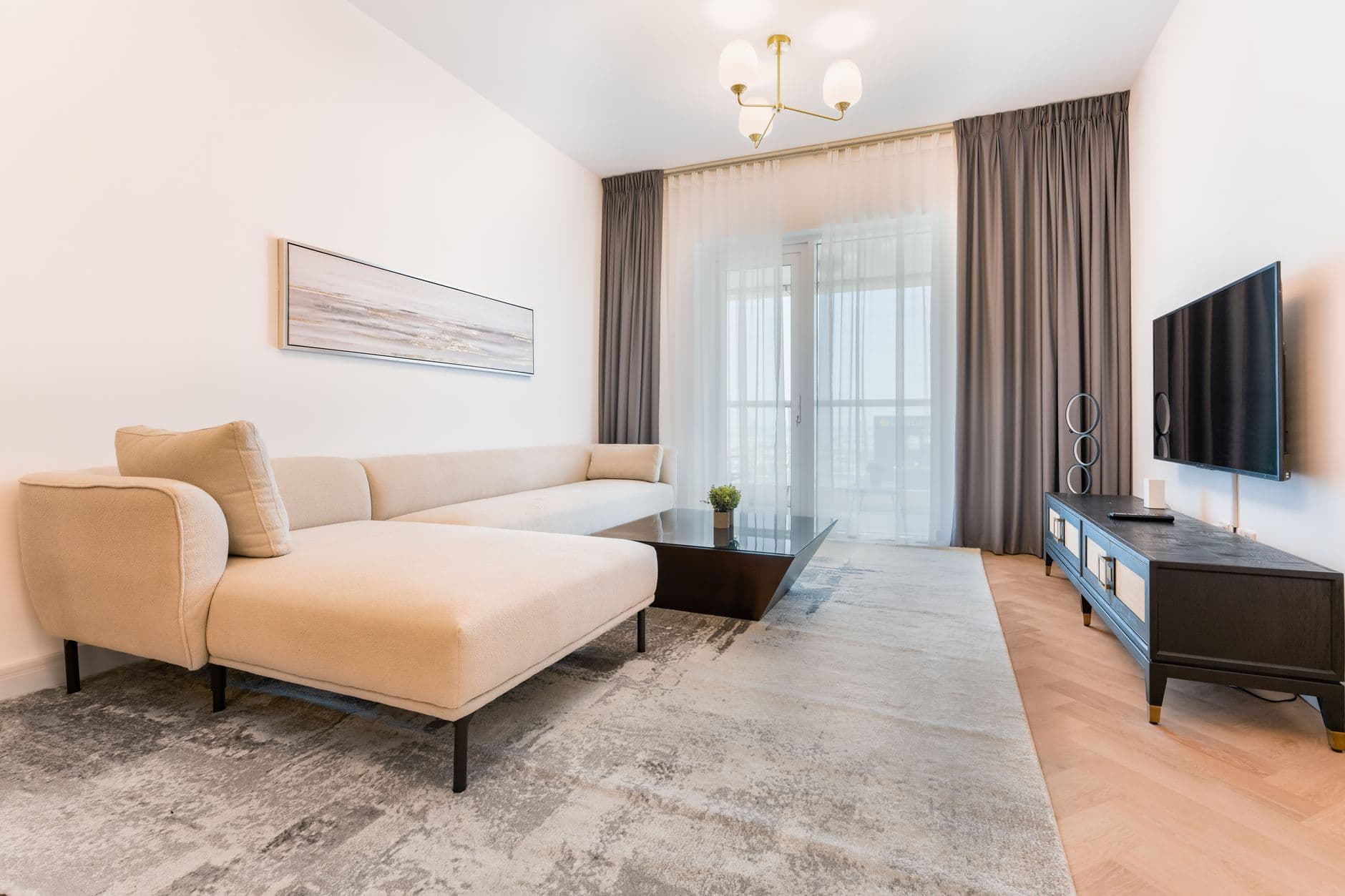
For years the advice for a small living room was the same everywhere: paint everything white, buy compact furniture, add a mirror, keep it light. I followed all of it in my first apartment and got a room that felt like a waiting area, bright but thin, with six small pieces of furniture fidgeting where two good ones should stand.
The thinking has moved on, and my own rooms moved with it. Small rooms do not need to pretend to be big; they need to feel intentional, and intention comes from fewer, larger pieces, warmer and deeper colour, and a layout that admits how the room is actually used. A compact living room can be the best room in the house precisely because everything in it had to earn its place. Here is the current playbook.
One real sofa beats two apologetic ones
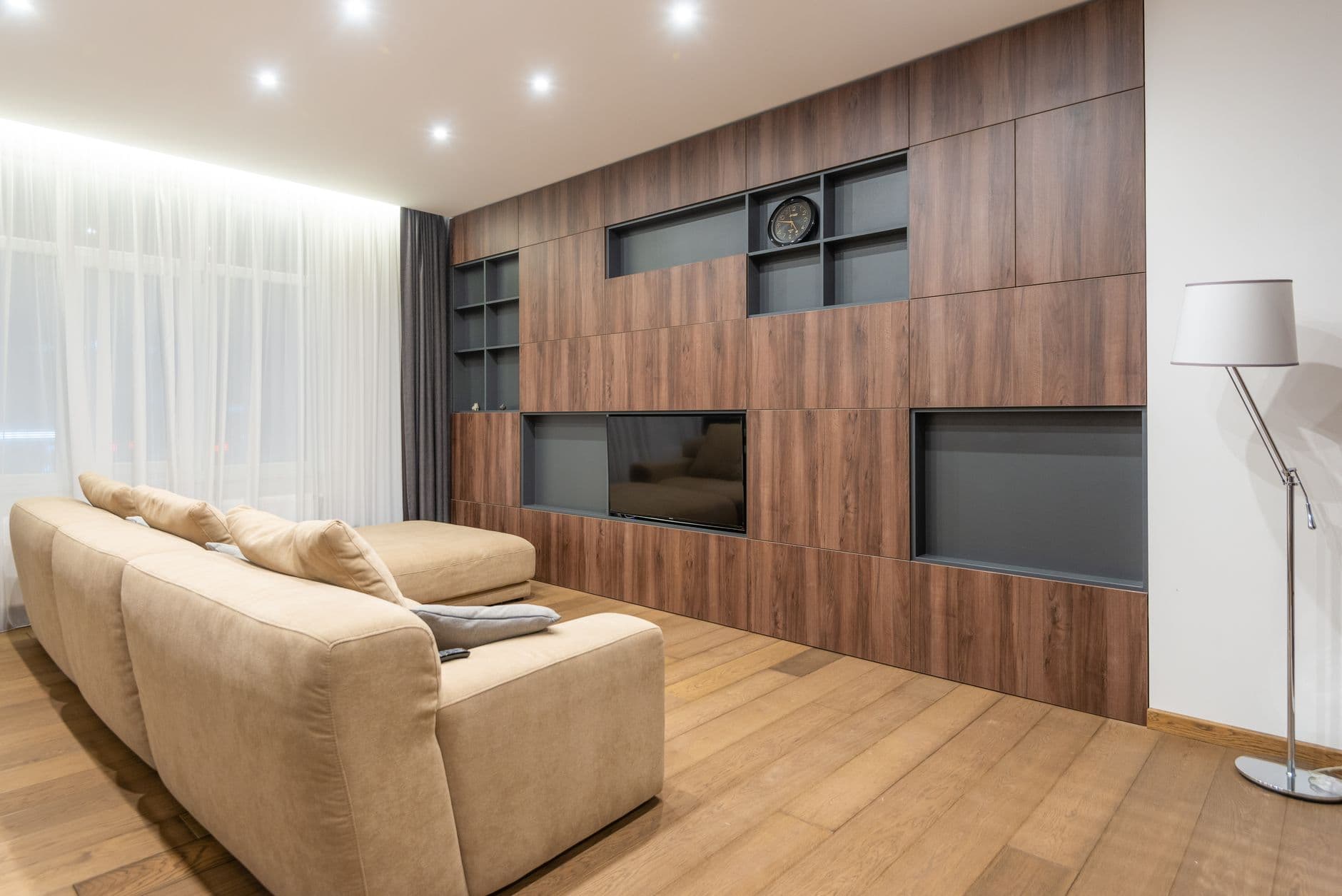
The counterintuitive rule of small rooms is that furniture scaled down makes the space feel smaller. Six slight pieces create six gaps, six shadows and six decisions for your eye. One full-depth three-seater against the longest wall creates a single generous gesture, and the room organises itself around it.
Choose a sofa with a low back and slim arms so it carries its size lightly, and let it be genuinely comfortable. In a small home the living room works every evening. If seating for guests worries you, add one sculptural chair that can angle in, and stop there. A footstool that slides under nothing and a second loveseat squeezed opposite are how small rooms end up feeling like furniture storage.
Warm depth beats all-white
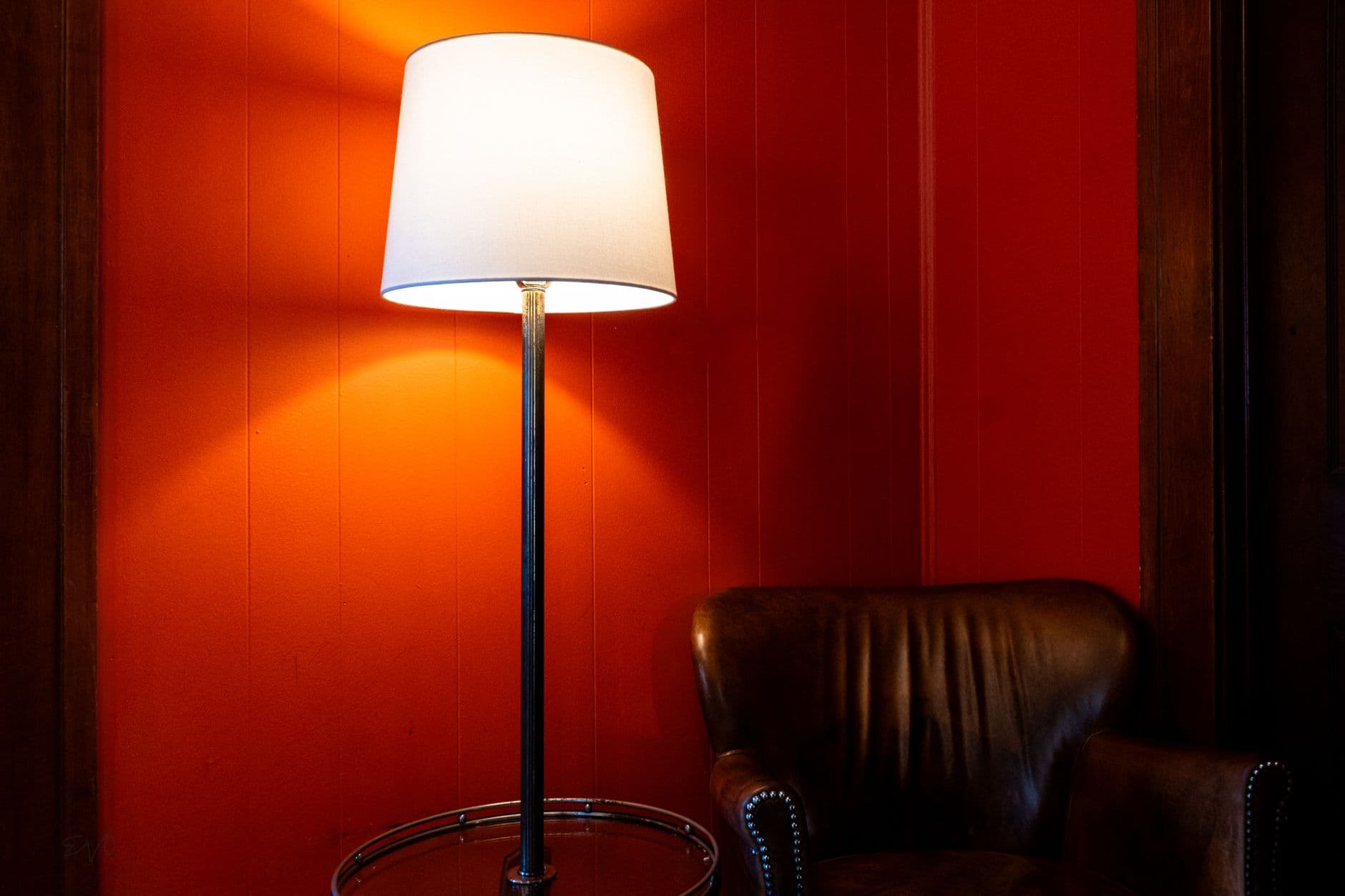
White was supposed to make small rooms feel airy. What it often does is expose them: every corner lit evenly, every limit of the room visible at once. A warm, deeper wall colour, clay, olive, caramel, soft bronze, blurs the corners and gives the room an edge-less quality that reads as depth.
Dimensions are fixed; mood is yours to choose, and mood is what visitors actually notice. This is the same logic that makes colour drenching work, and in a compact space you can borrow it at half strength: walls and trim in one warm mid-tone, ceiling a shade lighter, no white lines cutting the room into panels.
Go vertical, and go to the ceiling
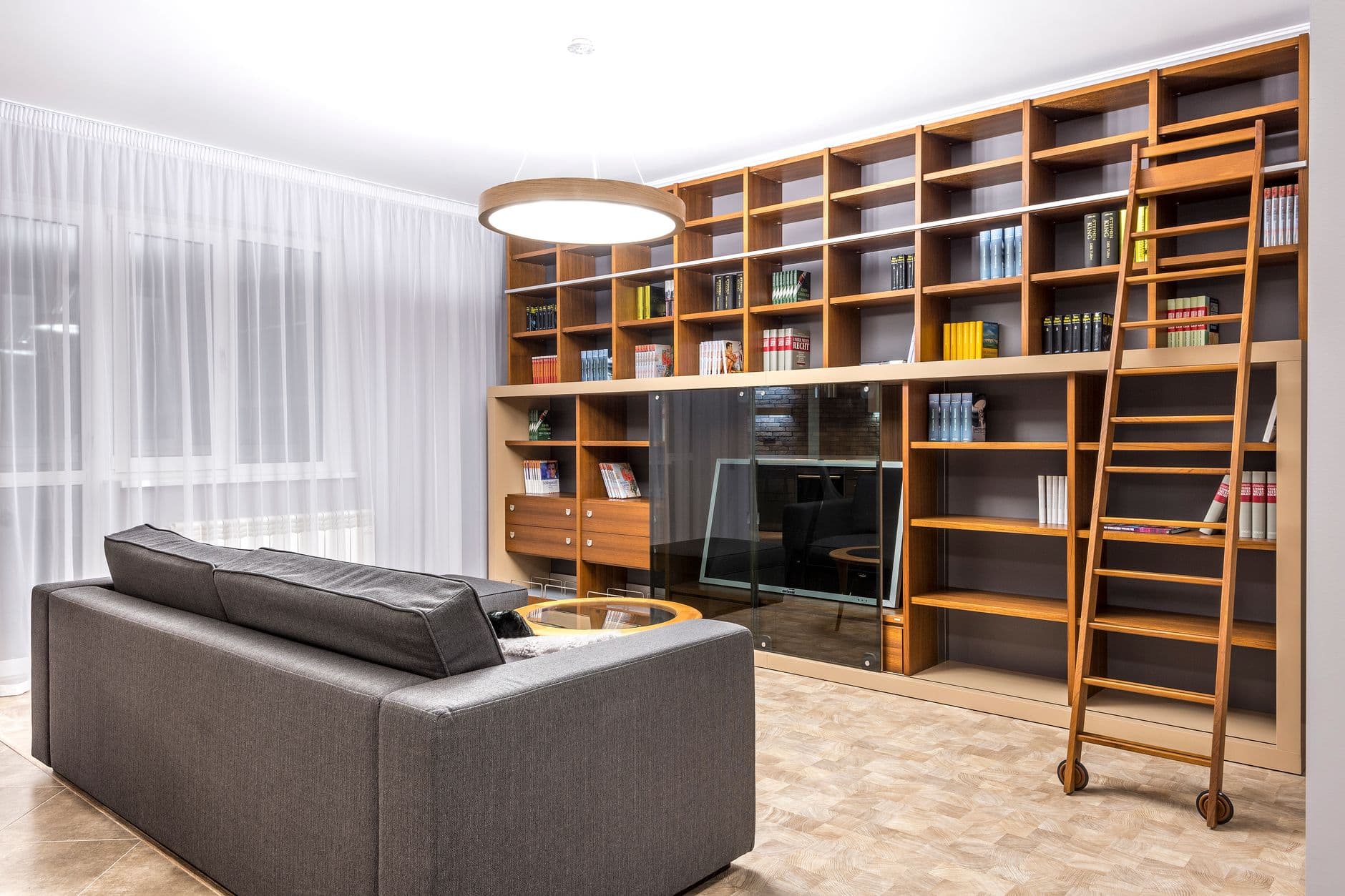
Floor space is the scarce resource, so spend the walls. A bookcase that runs to the ceiling holds triple what a sideboard does and pulls the eye upward, which makes the ceiling feel further away than it is. Full-height curtains, hung just below the ceiling line and dropping to the floor even beside a modest window, do the same trick in fabric.
Empty floor in a small room is not waste; it is the luxury. Wall lights and a slim picture ledge replace the console table and floor lamp that would otherwise eat a walkway. Keep the floor itself as visible as possible: legs on furniture rather than skirts, one large rug rather than two small ones, and nothing parked in a corner just because the corner was empty.
Zone it like a bigger room would
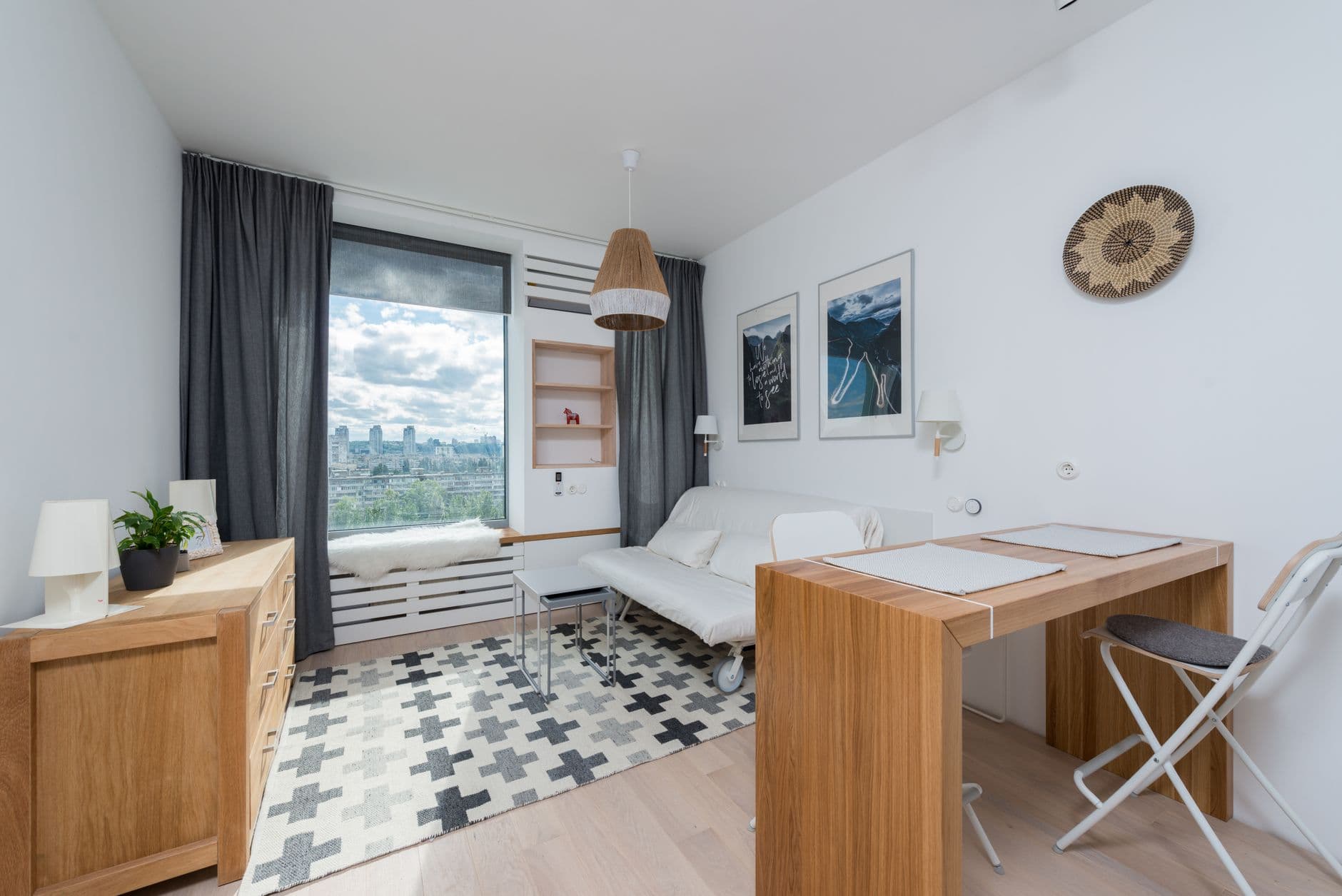
A small living room often has to be three rooms: lounge, office, occasionally dining. The mistake is letting the functions bleed into one visual soup. Zone with the rug first: the seating sits fully on it, and where the rug ends, the next zone begins. A slim desk behind the sofa reads as intentional architecture rather than an afterthought, especially with a wall light of its own.
When every function has an address, the room feels organised even at its busiest. If a dining moment must fit, a round pedestal table in a corner seats more people in less space than any rectangle and leaves no colliding corners. Each zone gets one light source it owns.
Curves buy you circulation
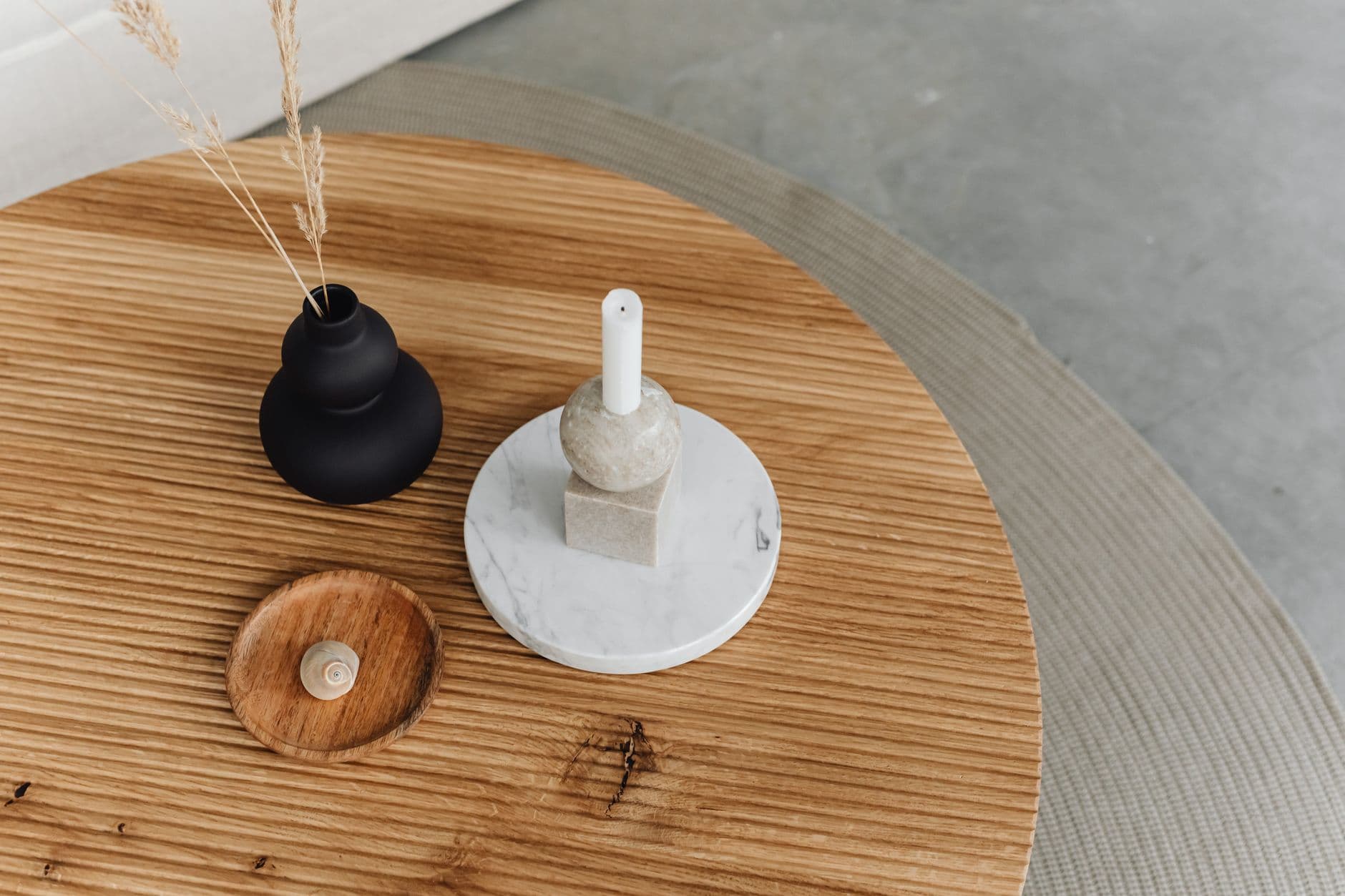
The return of curved furniture is usually sold as a style story, but in a small room it is a practical one. A round coffee table lets you cut the corner as you cross the room; a curved sofa arm softens the pinch point by the door; a drum-shaped pouf tucks where a square stool would jam. Sharp corners create no-go triangles of floor around themselves, and a compact room cannot afford them.
Walk the room after any change: if you can move from door to seat without a single sidestep, the layout is working. One or two curved pieces are enough, played against straighter lines so the room does not go soft everywhere. Circulation is the difference between small and cramped.
Edit like it is a gallery, rotate like it is a wardrobe
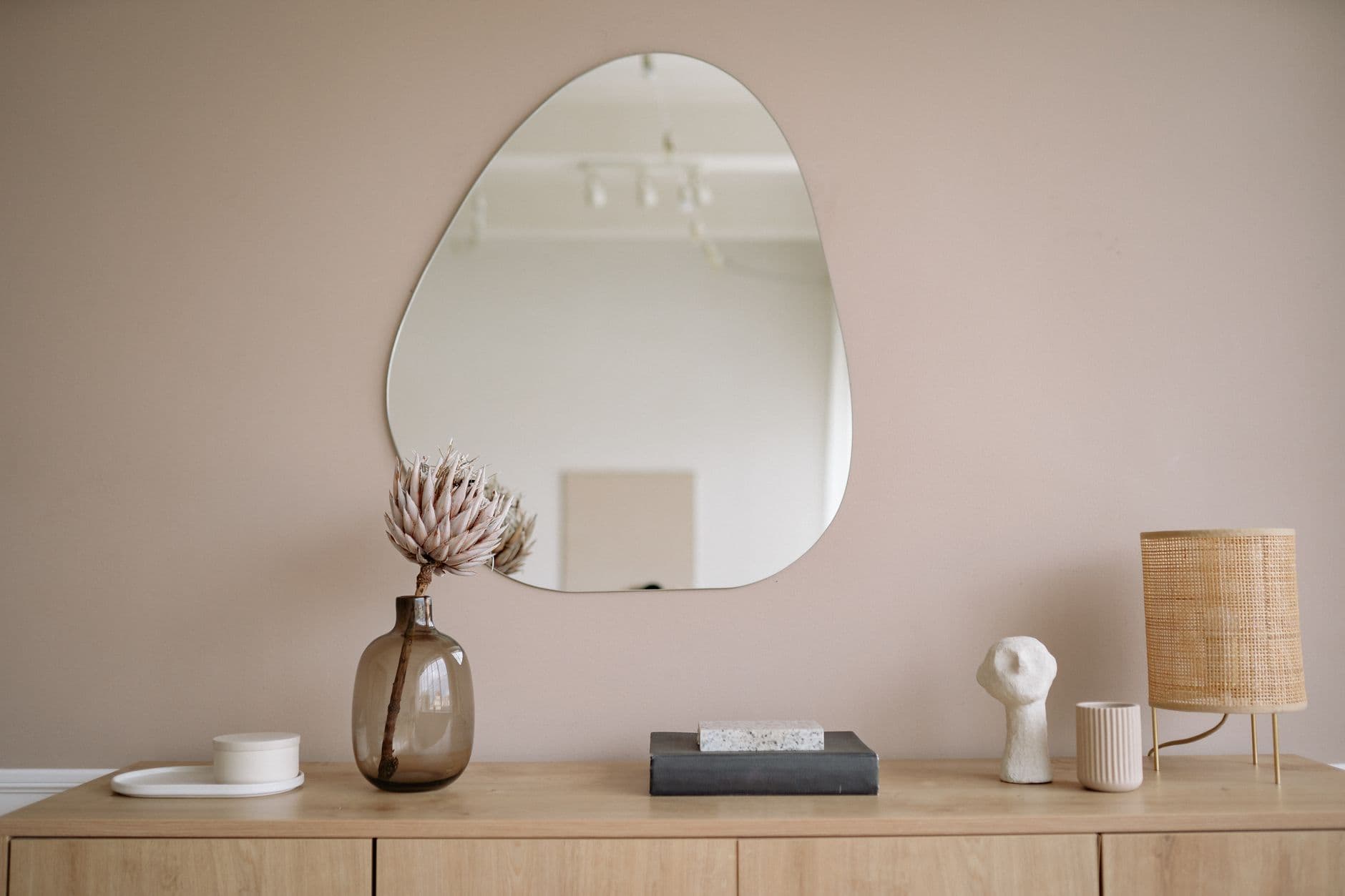
Small rooms amplify everything, which is why clutter hits harder here and why restraint pays better. I borrow from how galleries hang work: fewer objects, more meaning, and rotation instead of accumulation. One closed cabinet holds the life that should not be on display; surfaces get a working limit of three objects: something living, something made, something used.
A small living room that lives large is not the one that hides the most stuff; it is the one that chose, visibly, what deserved the space. Everything else waits its turn in the cupboard and comes out seasonally, so the room refreshes itself without a single purchase. That is the quiet answer to the old more-storage reflex.
Start with the sofa question tonight: if your room has more than two seating pieces, one of them is the problem. Sell it first, then paint.