Oak, Walnut or Ash: What Each Timber Changes in a Room
Wood is often sold as a quality grade. In a room it behaves more like colour, pattern and light, which makes the species and finish as important as the construction.
Written by Vestados Editorial · 5 August 2026
Affiliate disclosure: some links earn us a commission if you buy something, at no extra cost to you.
A timber sample is a small object with an unreasonable amount of influence. Put the wrong one beside a warm floor and the entire room can turn orange. Choose a very pale ash against cool daylight and a room that looked calm on a screen may feel washed out by noon. Walnut can bring depth to white walls, then become a dark block when it is used for every cabinet, table and door. These are not arguments for or against a species. They are reminders that wood behaves like colour and pattern long before it performs as a status symbol. Oak, walnut and ash can all make excellent furniture. Their grain, density, available board sizes and response to finish simply lead the eye in different directions. The useful question is not which timber is best. It is what the room needs from it, how the piece is built and whether the sample you approved is an honest preview of the delivered furniture.
Oak is the reliable anchor, not the neutral default
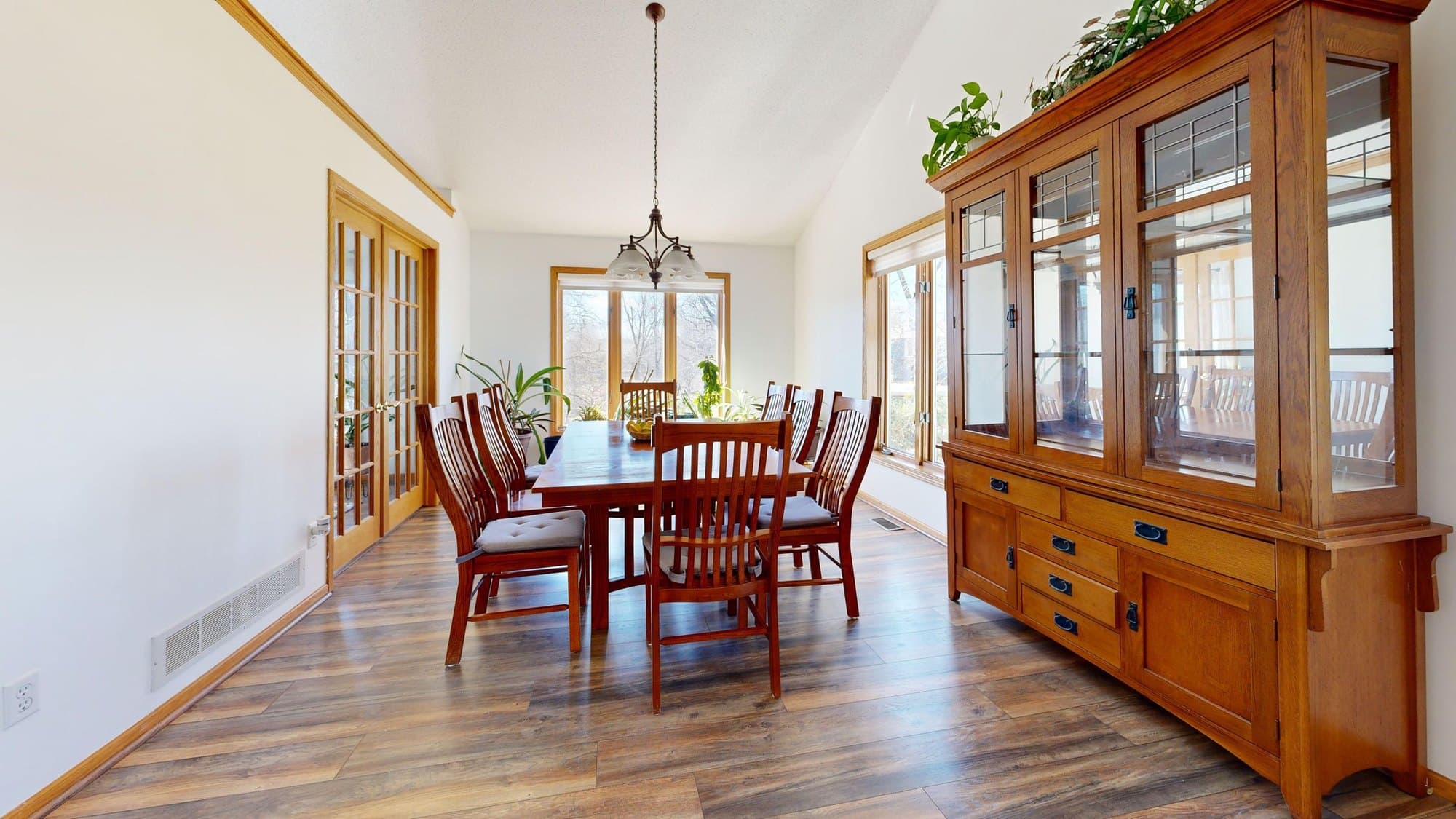
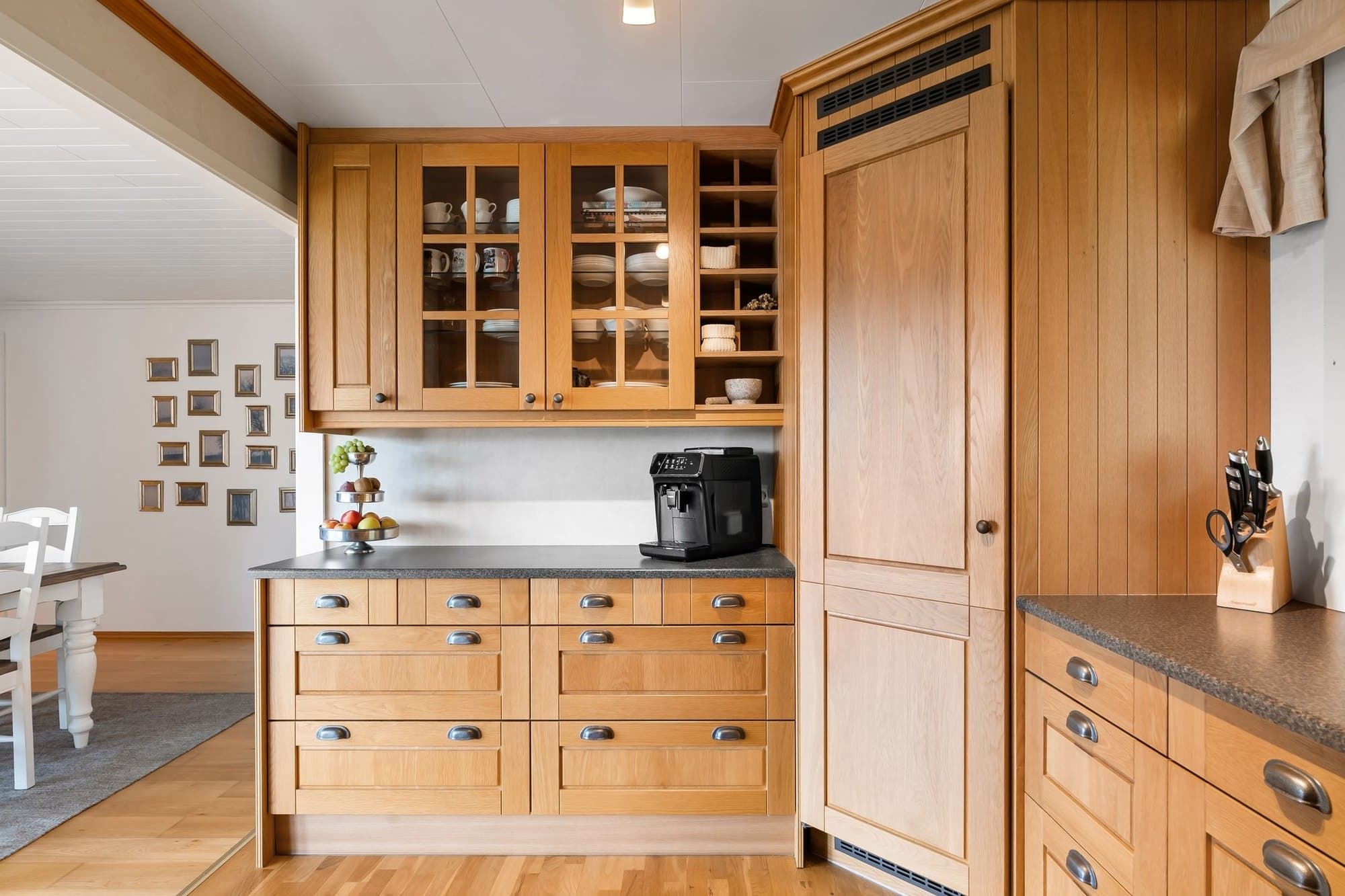
Oak is so familiar that shops often present it as the safe option. Familiar does not mean neutral. White oak can run from pale straw to brown, while European oak may bring its own range of honey, grey and tan. A soap, oil, white oil, lacquer or stain changes that range again. The grain is usually legible from across a room, and quarter-sawn boards reveal medullary rays that look almost silvery as the light moves. That activity makes oak useful on generous surfaces such as dining tables, cabinet fronts and flooring. It can hold a room together without demanding a decorative shape. The risk is accumulation. An oak floor, oak kitchen, oak table and six oak chairs may have four unrelated undertones and grain scales. Ask for samples from every maker, place them together on the floor and view them in morning and evening light. Do not try to match them perfectly. A deliberate difference is more convincing than three near matches. You might pair a pale, straight-grained table with darker chairs, or keep the cabinetry calm while allowing the table to show knots and figure. Construction still outranks species. A well-made veneered oak panel can remain flatter and use timber more intelligently than a wide solid panel forced to resist seasonal movement.
Ash brings line, light and a little more speed
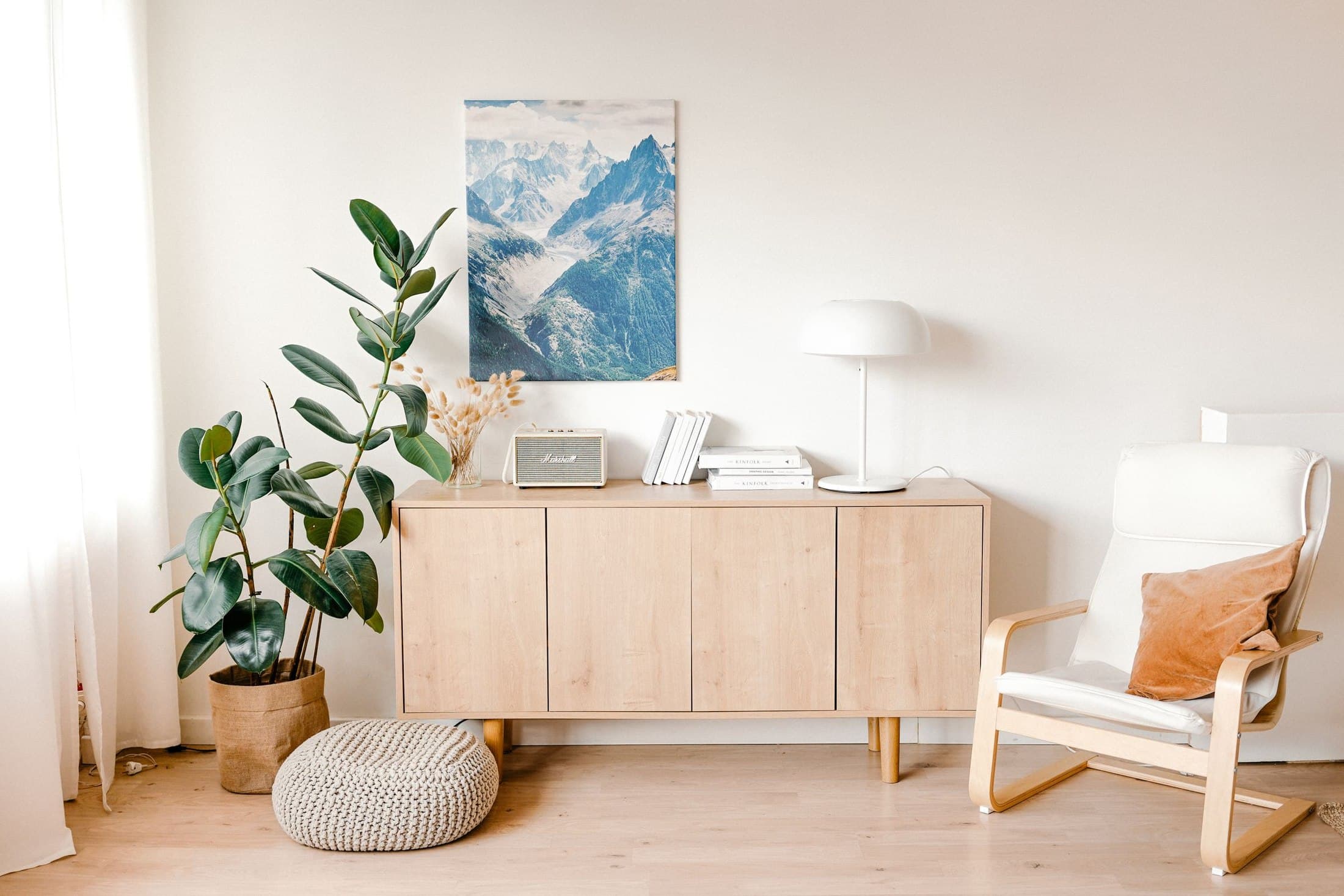
Ash is pale, but it is rarely blank. The contrast between its growth rings can be stronger than oak, especially on a broad board, so a light ash piece may read as more graphic than a warmer, quieter timber. The American Hardwood Export Council describes ash as strong for its weight, good for bending and turning, and easy to machine and finish. Those qualities explain its long relationship with chairs, handles and curved components. In a room, ash is useful when the furniture needs presence without darkness. A bent backrest, spindle chair or slim table can remain visually open even when the grain is energetic. Ash also accepts colour well. Black-stained ash keeps the grain visible, which makes it a richer alternative to an opaque black paint. The current health of ash forests and regional supply deserves a direct conversation with the manufacturer, particularly because pest and disease pressures affect availability. Ask where the timber was grown, whether the piece mixes sapwood and heartwood and how replacements will be handled if one chair arrives markedly different from the others. Pale timber exposes uneven staining and filler quickly. Inspect edges, underside surfaces and joints in person. A good finish should clarify the grain, not leave cloudy patches where the manufacturer tried to force several boards into one artificial colour.
Walnut works best when the room can absorb its depth
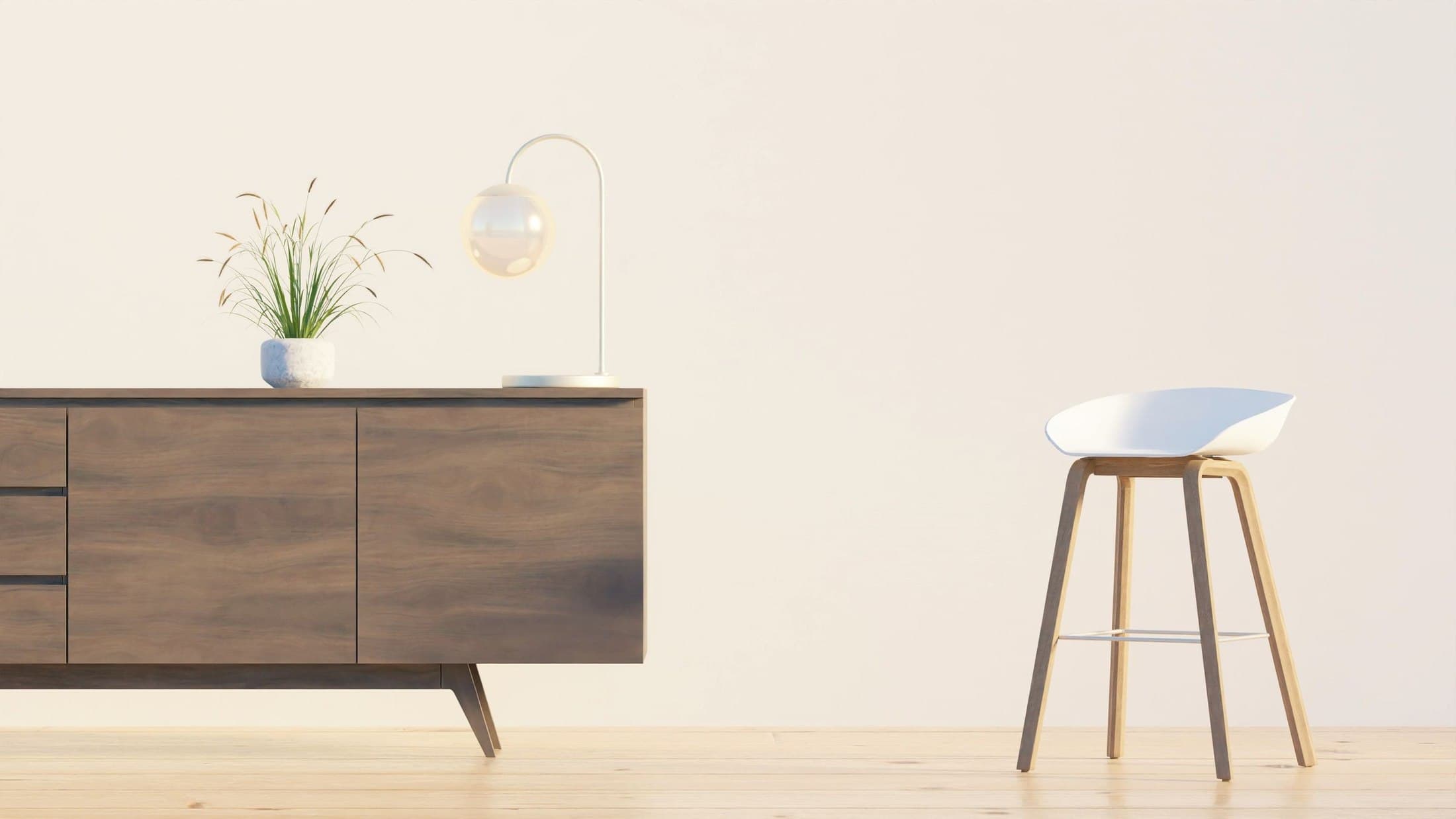
Walnut is often chosen because it looks expensive before anyone has studied the joinery. Its colour does create immediate depth. American walnut ranges from creamy sapwood to chocolate heartwood, sometimes with purple or wavy figure, while European walnut is often lighter and more varied. A single walnut cabinet can give a pale room a centre of gravity. A walnut dining table can make white ceramics and brushed metal look sharper. Used on every large surface, it can absorb more light than the room can spare. Treat the species like a dark paint and calculate its area. A sideboard, table top or run of lower cabinets may be enough. Also ask how the maker handles sapwood. Some celebrate the pale streaks, some cut them out, and some steam the timber to reduce the contrast. None is automatically superior, but the product photographs should not promise a uniform chocolate surface if the delivered piece embraces variation. Walnut is available as solid timber and veneer, and both can be excellent. On large cabinet doors, a well-matched veneer can display the figure with greater stability. On a table edge, solid timber provides repair depth and a more convincing profile. Strong sunlight can shift the colour over time, so rotate loose objects and expect the uncovered areas to change rather than treating the first mark of age as a defect.
Solid timber and veneer solve different problems
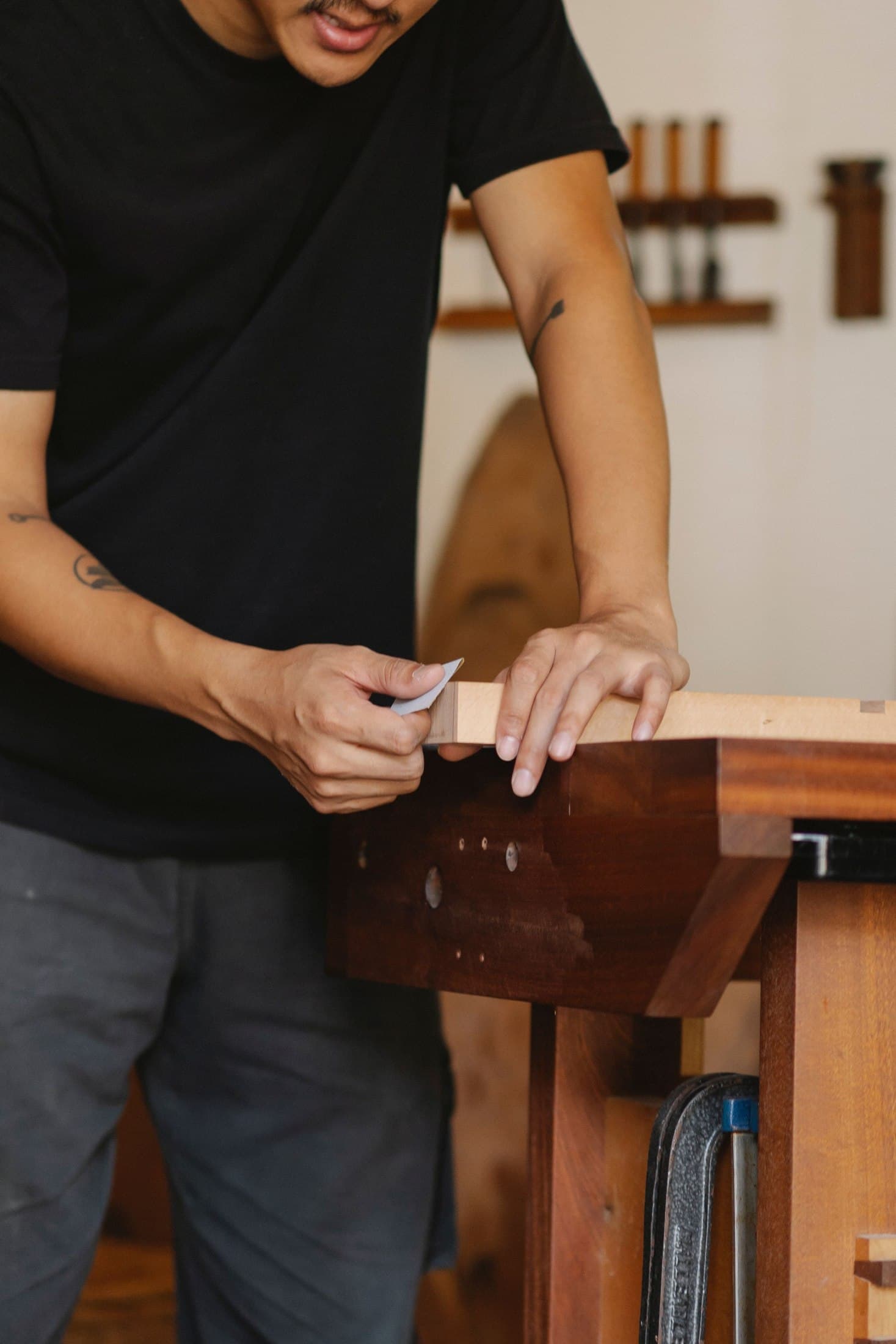
The phrase solid wood is powerful sales copy, but it is not a complete construction specification. Timber expands and contracts across its grain as humidity changes. A capable maker allows for that movement in a table top, door or frame. Veneer places a thin layer of real timber over a stable core, which can be sensible for broad doors, curved shells and patterned surfaces. The question is how each material is used. Ask which parts are solid, which are veneered, what the core is, how the edges are finished and whether the visible grain continues around them. A thick lipping can make a veneered top repairable at the edge. A careless paper-thin edge band can reveal the core after one collision with a vacuum cleaner. Solid timber deserves the same scrutiny. Wide boards may cup, poorly dried legs may twist and a heavy slab can become an engineering problem disguised as authenticity. Look underneath. Slotted fixings, battens and frame details can show whether movement has been considered. On chairs, follow the grain through the legs and curved components. On tables, inspect the join between top and base and ask how the finish can be renewed. Good furniture uses solid timber, veneer, plywood and engineered cores with purpose. Bad furniture relies on one reassuring phrase and hopes nobody examines the edge.
Approve the sample in the room, then record it
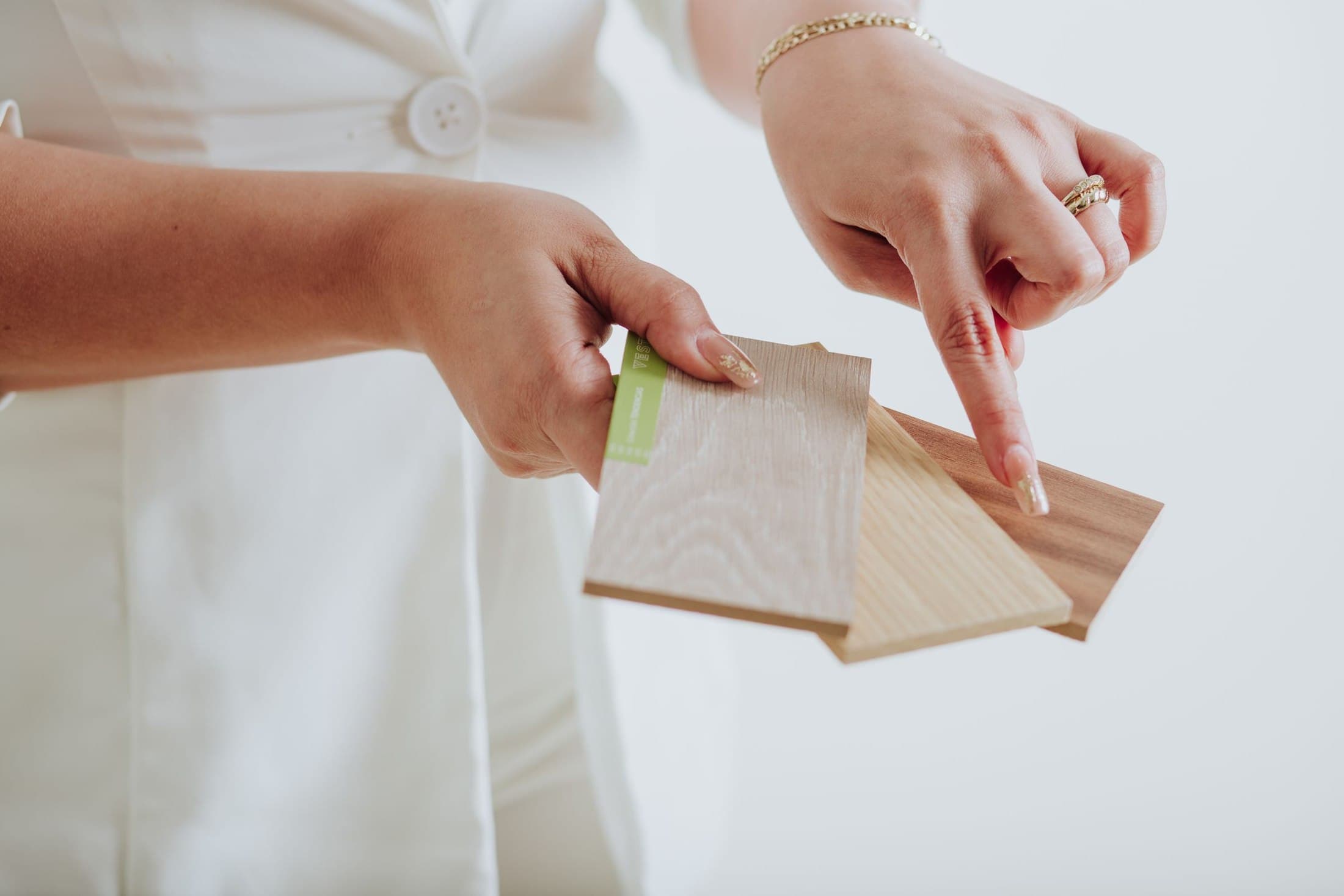
Online swatches flatten everything that matters about timber: grain scale, sheen, pores, figure and the way oil shifts under warm light. Order the largest physical sample available and write the species, cut, finish name, date and supplier on the back. Put it beside the floor, wall paint, stone and main upholstery. Check it flat and vertical because light reaches a table top and a cabinet front differently. Then photograph the group in daylight and after dark with the lamps you actually use. That record becomes useful when a second order is needed or a delivery looks wrong. Ask the seller what level of colour and grain variation falls within specification, whether showroom pieces have darkened, how spills should be handled and whether the surface can be spot repaired. For responsible sourcing, read the actual certification claim rather than relying on a green symbol in a marketing banner. FSC explains that its 100%, Recycled and Mix labels refer to different source combinations. The label does not grade the timber or guarantee a particular finish. Finally, leave room for natural variation. Timber that looks exactly repeated across every door and chair may have been heavily sorted, stained or printed. Consistency can be useful, but character is often the reason wood was chosen in the first place. Decide where variation is welcome before the boxes arrive.