Hans Wegner and the Serious Business of a Good Chair
Wegner drew hundreds of chairs, yet the enduring lesson is smaller and more useful: every joint, curve and woven seat had to justify itself in the room and under the body.
Written by Vestados Editorial · 4 August 2026

There are chairs that ask to be photographed and chairs that survive breakfast, homework, long dinners and the daily scrape across a floor. Hans J. Wegner spent his career trying to make one chair do both. The Danish cabinetmaker turned designer is credited with close to five hundred chair designs, but numbers tell us very little about why his work still feels alert. Look instead at the back of a Round Chair, the cord on a Wishbone Chair or the three-legged poise of a Shell Chair. Each decision is structural before it is decorative. That order matters. It is also why a Wegner chair can sit beside an old table, a contemporary kitchen or a room full of colour without becoming stage scenery. This is not a roll call of icons. It is a close reading of three chairs, the craft behind them and the questions worth asking before an authentic piece, a licensed reissue or a vintage example enters your home.
The apprenticeship is visible in every line

Wegner began as an apprentice cabinetmaker in Tønder before studying at what is now the Royal Danish Academy. That sequence helps explain the authority of his drawings. He knew what a chisel could reach, where timber would accept a curve and when a junction needed more substance. His best chairs never hide construction beneath a decorative skin. The rail enters the leg clearly. A woven seat shows how it is held. A backrest thickens where the hand and body meet it. This candour gives the furniture warmth because a sitter can read how it was made without knowing the vocabulary of joinery. It also gives us a useful buying test. Walk around a chair and look at the back, the underside and the place where two materials meet. A good example should become more convincing, not less. Check whether the arms meet the back naturally, whether the rear legs feel like part of one drawing and whether screws or brackets have been used as apologies for a weak joint. Wegner's work reminds us that craftsmanship is not an added luxury treatment. It is the visible logic that allows a chair to look settled after the novelty of its outline has worn off.
The Round Chair is restraint at full resolution
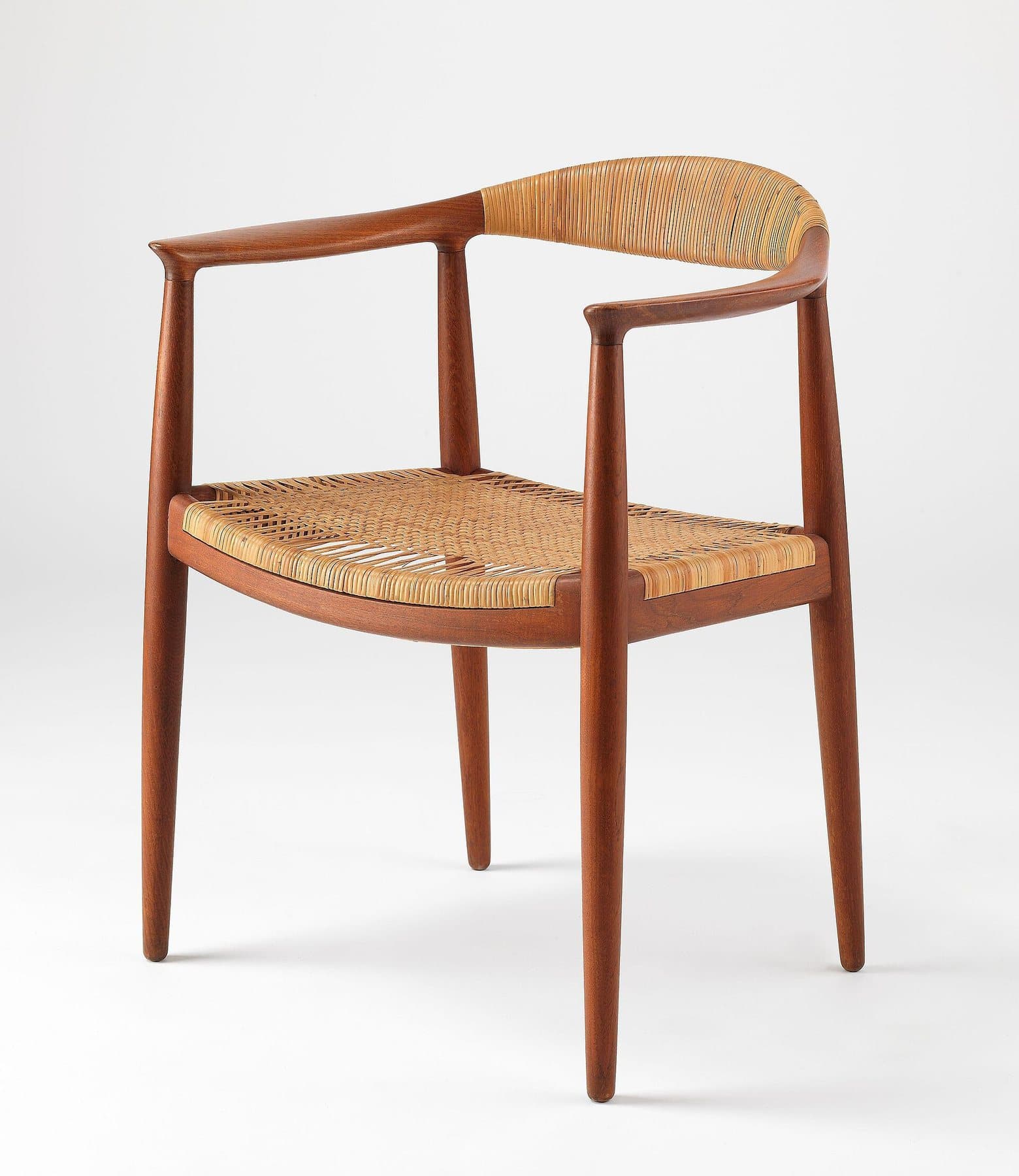
The Round Chair of 1949 is often introduced through its public life. It became known in the United States as The Chair and appeared in the televised 1960 presidential debate between John F. Kennedy and Richard Nixon. Its real achievement is more intimate. The broad back rail travels around the sitter in one controlled sweep, then meets the arms through joints that are meant to be seen. There is no upholstery to soften a poor proportion and no ornamental flourish to rescue a dead surface. The carving carries the expression. Sit in one and the armrest lands where a hand expects it; stand behind it and the rail reads almost like a horizon. That dual view is valuable in contemporary open-plan rooms, where dining chairs are seen from the kitchen and living area as often as they are used. Vintage buyers should compare the model number, maker, timber, woven seat and dimensions against a museum or manufacturer record rather than trusting the nickname alone. The Nasjonalmuseet lists a JH 501 example designed in 1949 with carved mahogany and a woven cane seat. Current PP Møbler versions include oak, ash, cherry and walnut finishes. Those are different production contexts, so provenance should be specific. A famous silhouette is not proof of an authentic chair.
The Wishbone Chair makes repetition feel human
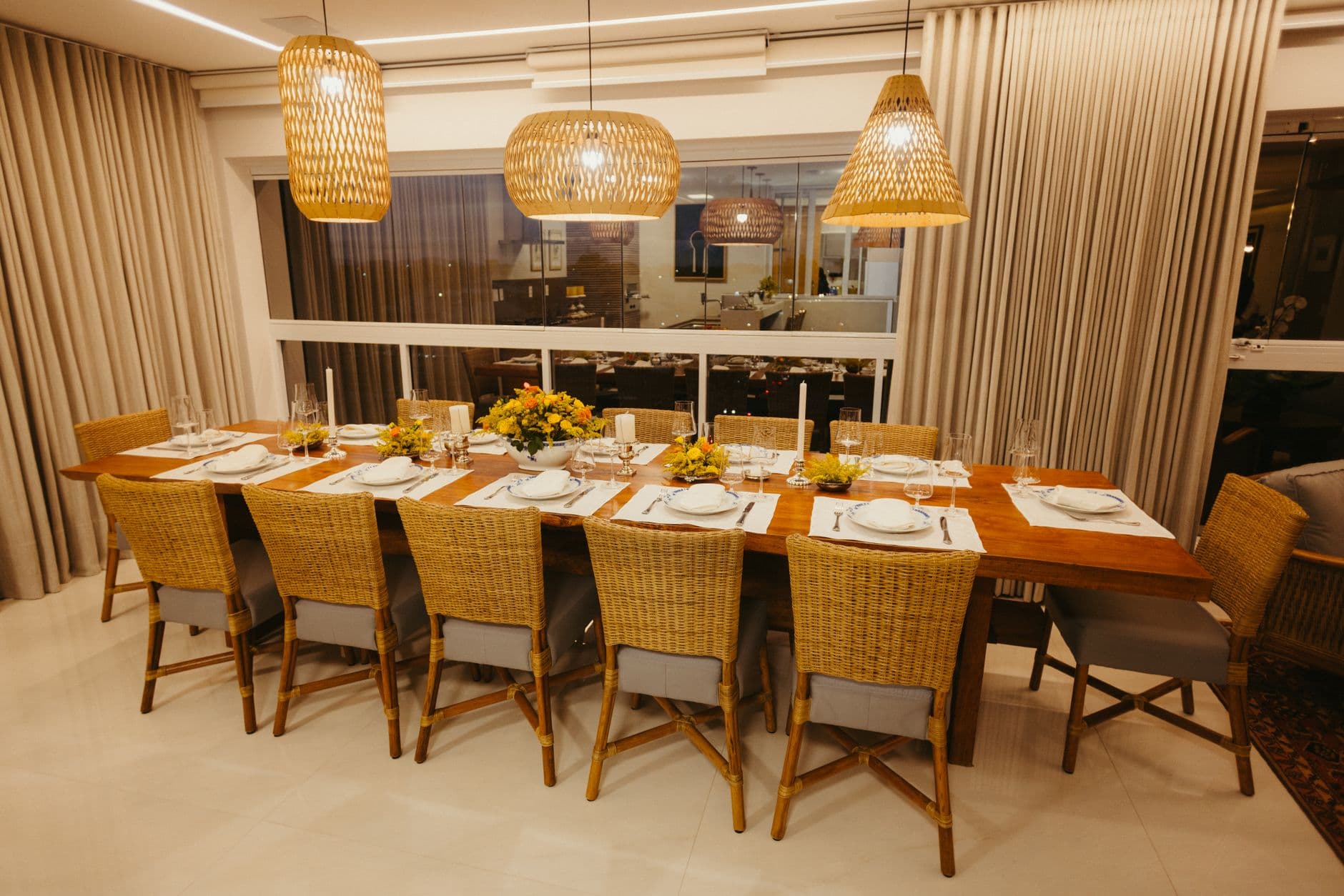
The CH24 Wishbone Chair was designed in 1949 and entered production in 1950. It has remained there ever since. Longevity on that scale can make a chair look inevitable, but its construction is anything but casual. Carl Hansen & Søn describes more than one hundred production steps and about 120 metres of paper cord in the woven seat. The steam-bent top rail joins back and armrest in a single gesture while the Y-shaped support stabilises the curve. For a buyer, the lesson extends beyond authorship. A dining chair is a repeated object, so small decisions multiply. Six heavy backs can crowd a modest table. Six arms that are a little too high can fail to tuck beneath it. Six pale seats can either calm a room or make every spill visible. Measure table clearance, seat height and the distance needed to pull a chair out before choosing timber or colour. Then inspect the cord. It should feel evenly tensioned, without broken strands or a sag that places pressure on the frame. Current licensed versions span oak, beech, ash and walnut with natural or black cord and several painted finishes. That breadth is useful, but it is also a reason to resist ordering from a thumbnail. A soaped oak chair, a lacquered walnut chair and a painted beech chair will age in very different ways.
The Shell Chair had to wait for its room
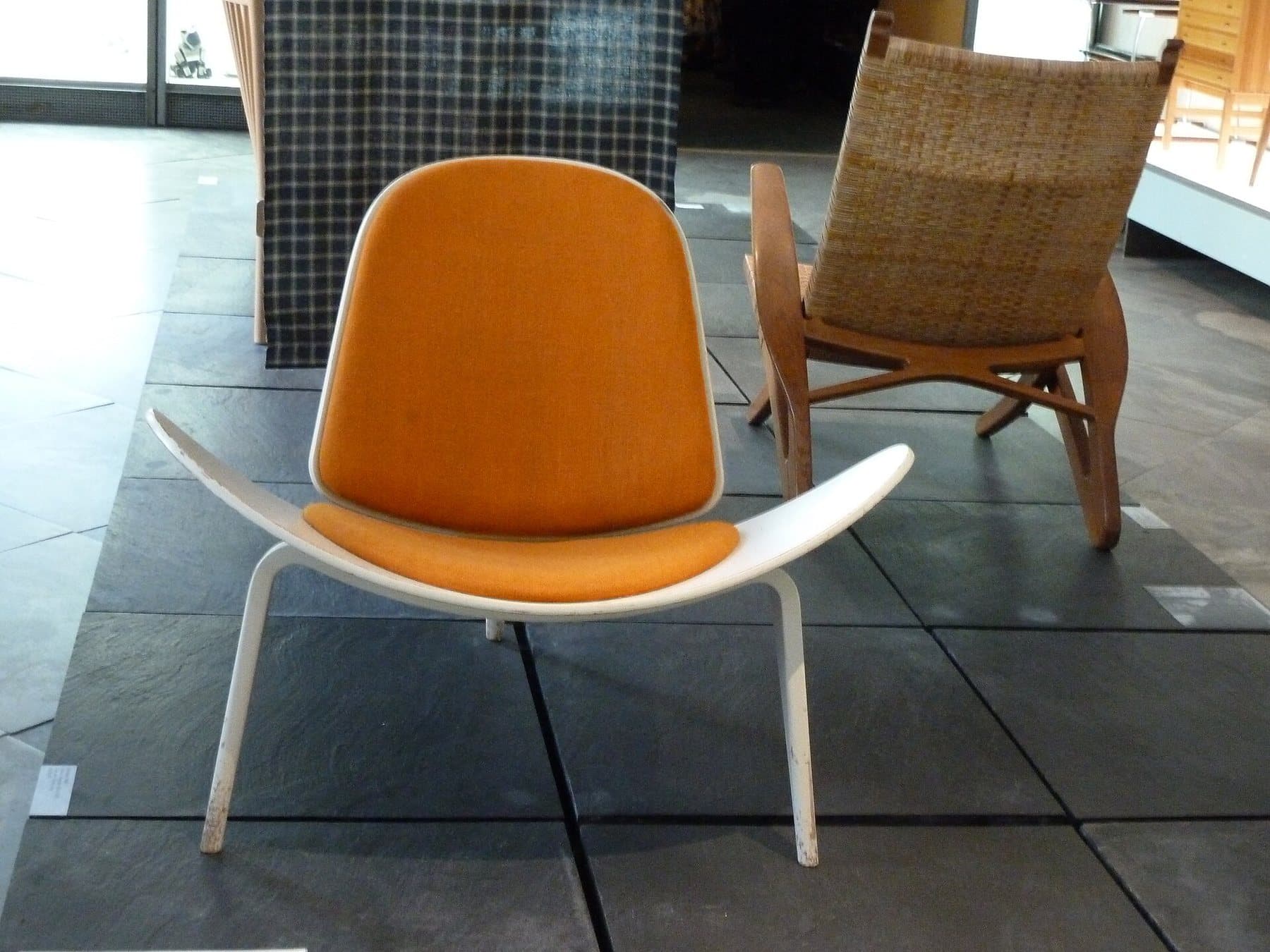
Wegner presented the CH07 Shell Chair in 1963. Critics noticed it, the wider market hesitated and production remained limited. Carl Hansen & Søn brought it back in 1998, when moulded veneer and its low, winged profile found a more receptive audience. That delayed success is a useful correction to the idea that lasting design must be instantly agreeable. The chair is broad, low and unapologetically visible. Its seat and back seem to float above three curved legs, yet the stance is stable and the back is finished as carefully as the front. It needs breathing room. Pressed into a corner, the wings become awkward; given space beside a low table or across from a sofa, the outline can organise an entire seating group. Before buying, tape the footprint on the floor and include the route around it. Check the current technical drawing because upholstery changes the visual weight even when the frame stays constant. On vintage examples, inspect the veneer edges, the junctions at the legs and any reupholstery work. A poor fabric choice can make the seat look swollen, while tired foam can flatten the intended curve. The Shell Chair is not a universal answer. It is a strong one when a room can accommodate both its width and the empty space that lets the three-legged frame be read.
Buy the maker, the condition and the fit
A design classic attracts shorthand. Sellers write Wegner style, Danish type or vintage inspired because the outline does commercial work even when the provenance cannot. Treat those phrases as descriptions, not evidence. For an authentic vintage piece, ask for photographs of labels, stamps, underside construction, joints, upholstery and repairs. Compare them with a museum record or the licensed maker's archive, and consult a specialist when the value justifies it. For a new licensed chair, confirm the manufacturer, exact model, material, finish, upholstery or cord, warranty and return terms. Then move from authorship to use. A Round Chair and a Wishbone Chair occupy different widths at a table. A Shell Chair sits lower than a conventional armchair. Paper cord, cane, leather and wool ask for different maintenance. None of this diminishes the beauty of the object. It protects it from becoming an expensive mismatch. Wegner's most practical legacy is the refusal to separate appearance from behaviour. His chairs are memorable because the silhouette, the joint and the seated body arrive at the same answer. That is the standard worth borrowing, even when the chair you eventually choose bears another name.